Precision Motion Technology: Understanding the Four Performance Levels
From mechanical bearings to magnetic levitation, choosing the right motion platform means balancing precision, dynamics, motion quality, flexibility, and system complexity.
Precision motion systems are essential to semiconductor manufacturing, photonics, metrology, laser processing, and industrial automation. While travel range, load capacity, resolution, and speed are important selection criteria, they tell only part of the story. The bearing technology that guides a stage has a fundamental influence on its performance.
Technologies Not Covered in This Post
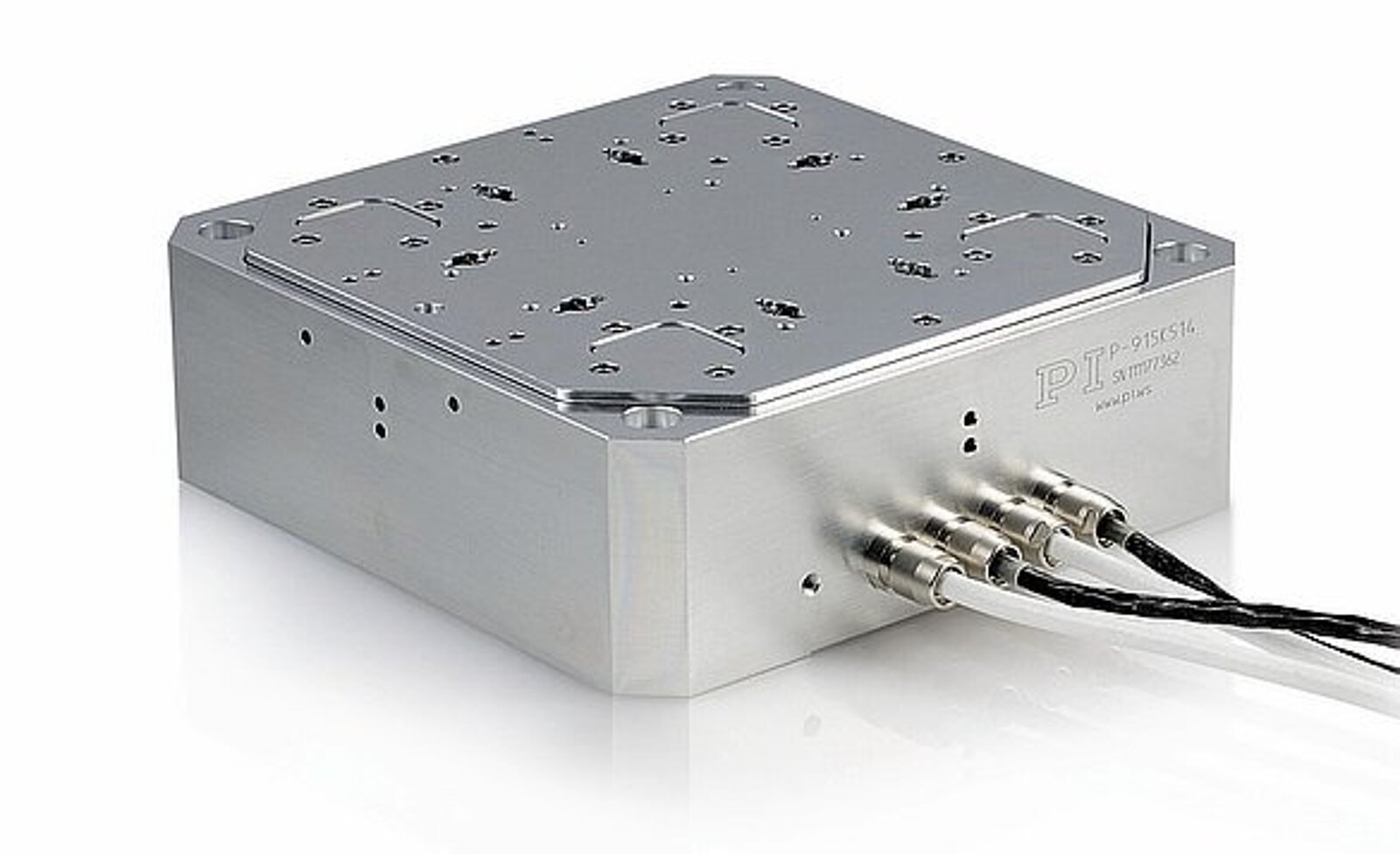
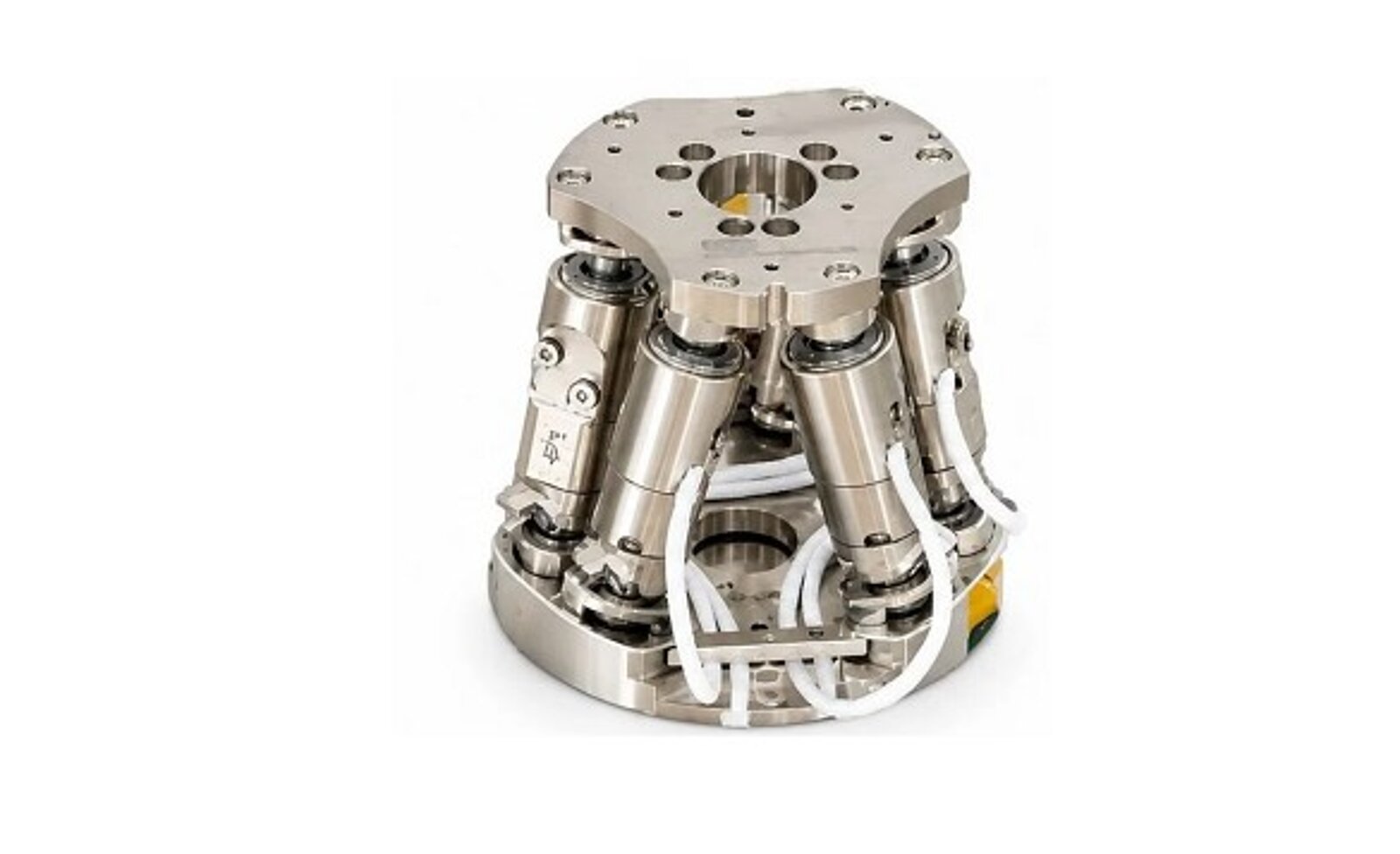
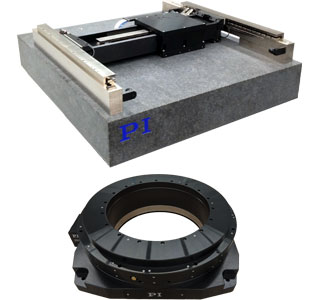
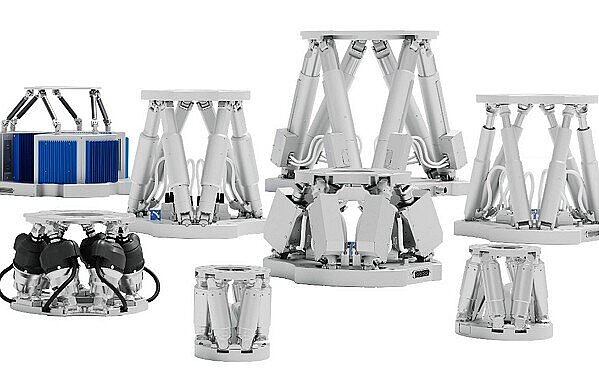
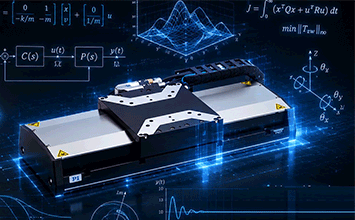
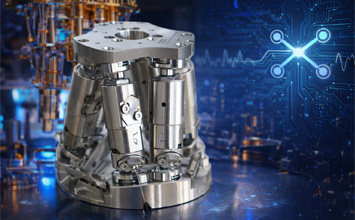
This post focuses on electromagnetic drives, comparing magnetic levitation technology with conventional motorized positioning systems using mechanical or air bearings. We do not cover advantages and limitations of specialized piezoelectric nanopositioning systems and parallel-kinematic multi-axis approaches, such as hexapods or tripods.
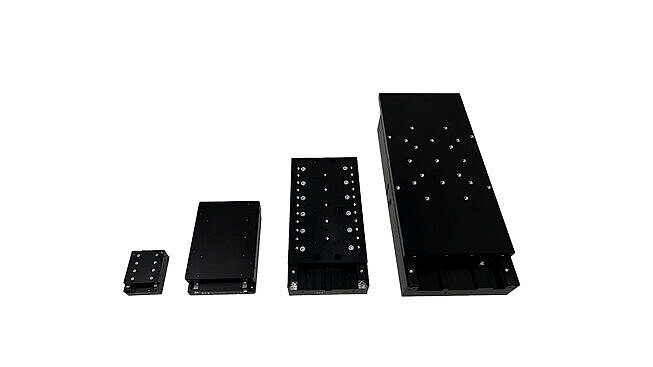
To learn more about the capabilities and applications of piezo flexure / piezo motor technologies, and hexapods, follow the links in the captions above and check out the PI tech blog.
Electromagnetic Precision Motion Systems
Here, we are comparing four precision motion and positioning technologies, three of them well-established and one that stands out for its “bearing-free” approach – stages based on recirculating bearings, crossed-roller bearings, air bearings, and magnetic levitation (MagLev). Each offers a different combination of motion quality, mechanical stiffness, integration flexibility, and cost.
Primary and Secondary Degrees of Freedom
An additional consideration is becoming increasingly important: how easily can a positioning system provide more than its primary degrees of freedom?
A conventional XY stage may need additional Z, tip/tilt, or rotary stages to satisfy application requirements. Magnetic levitation changes this approach by enabling multiple degrees of freedom directly through controlled magnetic forces. In other words, in maglev systems, six-degree-of-freedom capability comes naturally. Understanding these
Level 4: Recirculating Bearings – Versatile Motion for Broad Industrial Applications
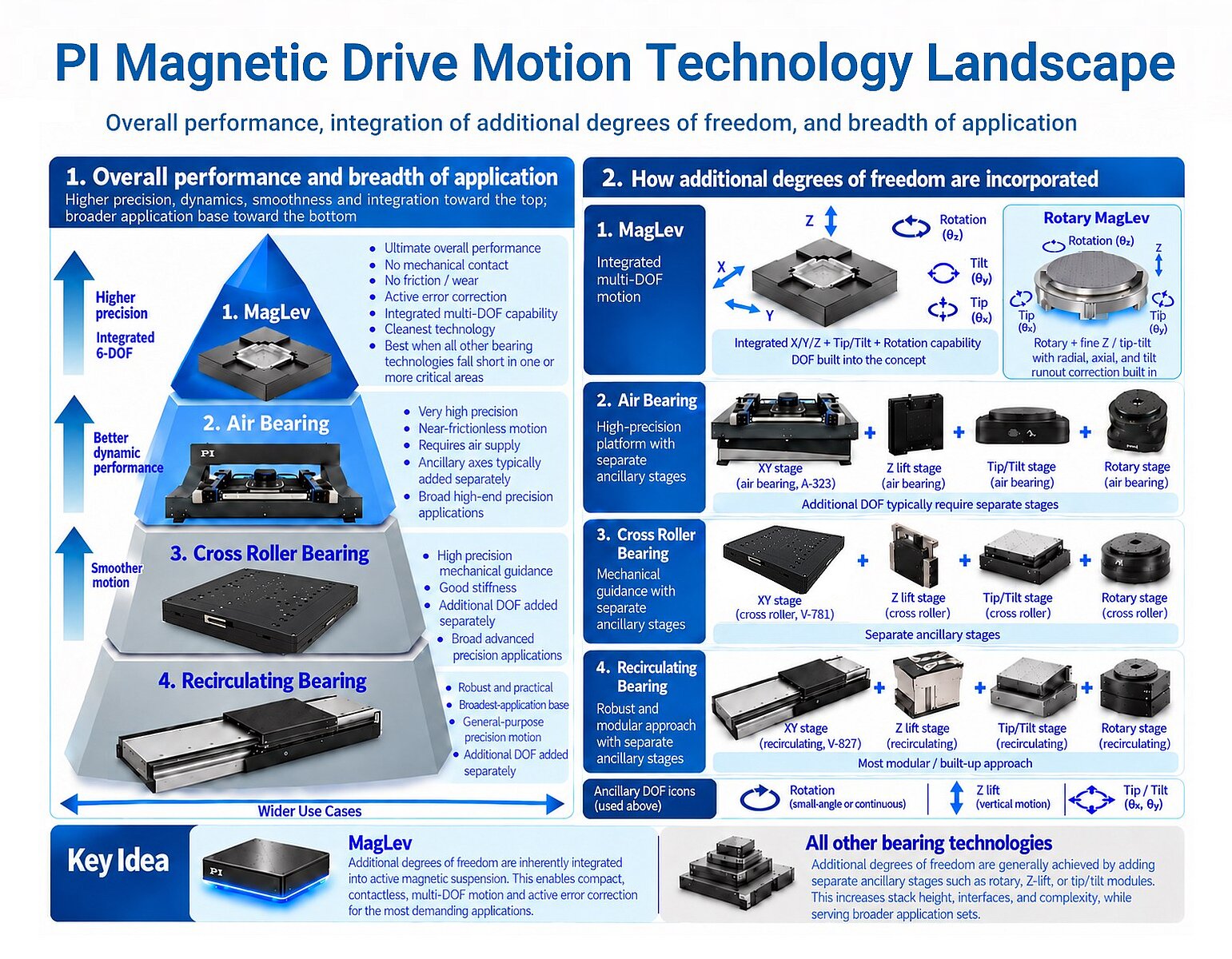
Recirculating ball bearings are among the most widely used guidance technologies in industrial motion systems. In the graphic, this is the base of the pyramid: the broadest range of applications, with additional axes added as separate stages. Balls circulate continuously through a bearing carriage as it moves along a precision rail, providing load support and allowing long travel ranges without requiring an excessively long bearing assembly.
This makes recirculating bearings particularly attractive for general-purpose precision positioning, automation equipment, material handling, and processes where long travel, mechanical robustness, and cost-effectiveness matter. Learn more on lifetime considerations of recirculating ball bearing stages in “Anatomy of a Million Mile Linear Translation Stage”.

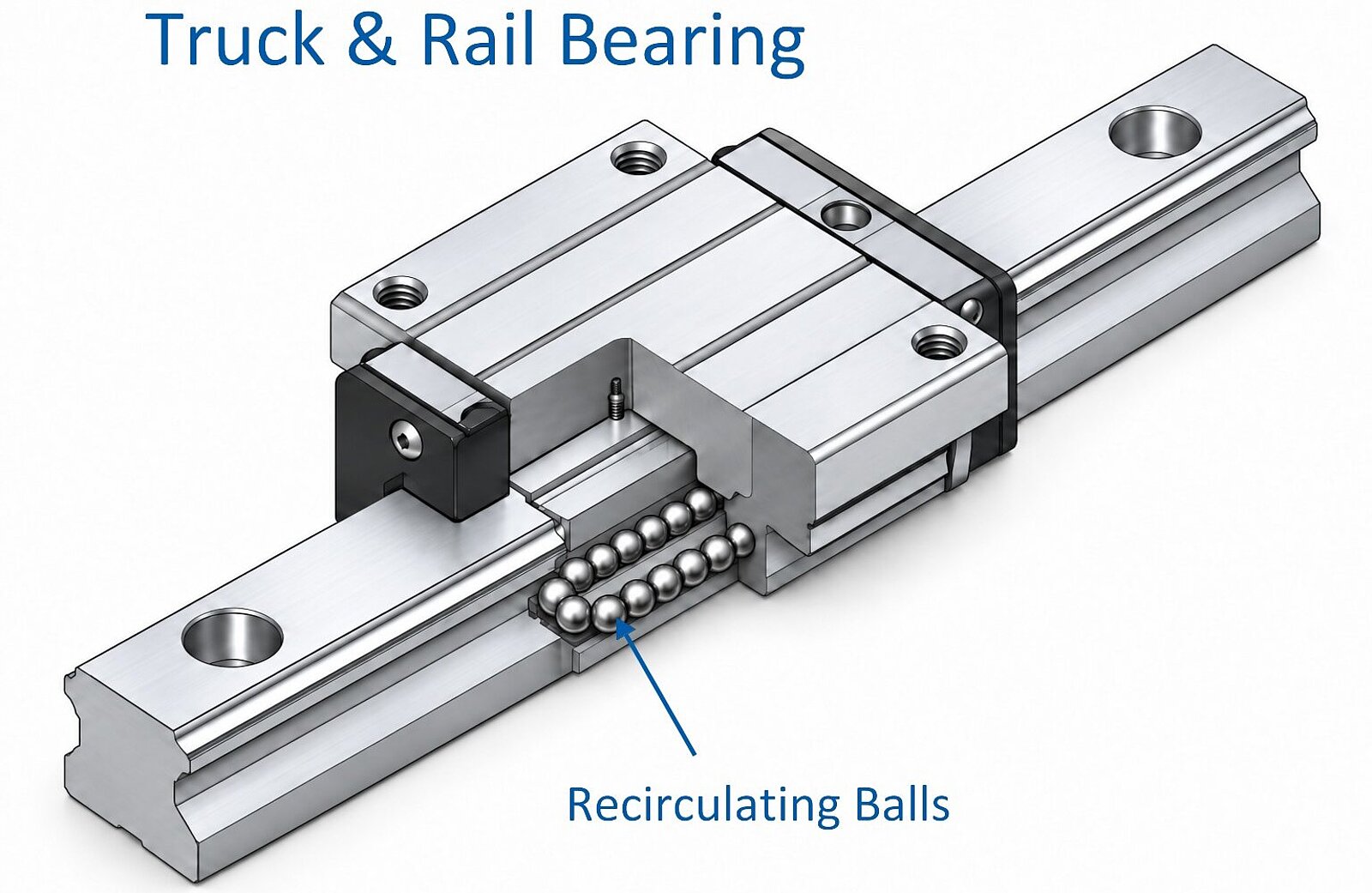
Modern recirculating-bearing stages can carry heavy loads, deliver sub-micrometer precision and provide high speeds when combined with direct-drive linear motors and high-resolution encoders. However, mechanical contact introduces friction, wear, and small disturbances associated with rolling-element circulation.
These effects may be insignificant in many industrial processes but can become limiting factors in demanding scanning and nanometer-level measurement applications.
Key Characteristics
- Robust, practical construction with broad application coverage
- Long travel ranges and good load capacity
- Cost-effective integration into industrial machinery
- Mechanical contact and associated friction and wear
- Motion disturbances associated with rolling-element circulation
- Additional degrees of freedom generally implemented through separate stages
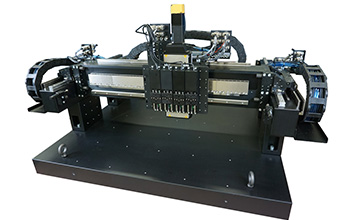
For example, a recirculating-bearing XY platform can be combined with a Z-lift stage, tip/tilt stage, and rotary stage. This modularity gives machine designers flexibility to choose exactly the axes they need.
The trade-off is that each additional module adds height, mass, mechanical interfaces, cabling, and potential alignment errors.
Typical applications: Industrial automation, inspection equipment, material handling, positioning of optical assemblies, general-purpose precision machinery

Level 3: Crossed-Roller Bearings – Higher Stiffness and Smoothness
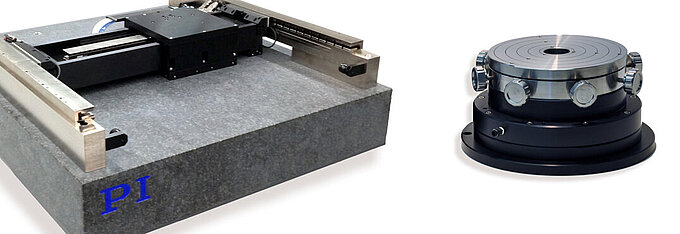
Crossed-roller bearings are available for linear and rotary stages. They provide a step toward smoother, more highly constrained precision motion. In the graphic, this is the second tier from the bottom, offering high precision and good stiffness, with additional axes still added as separate stages.

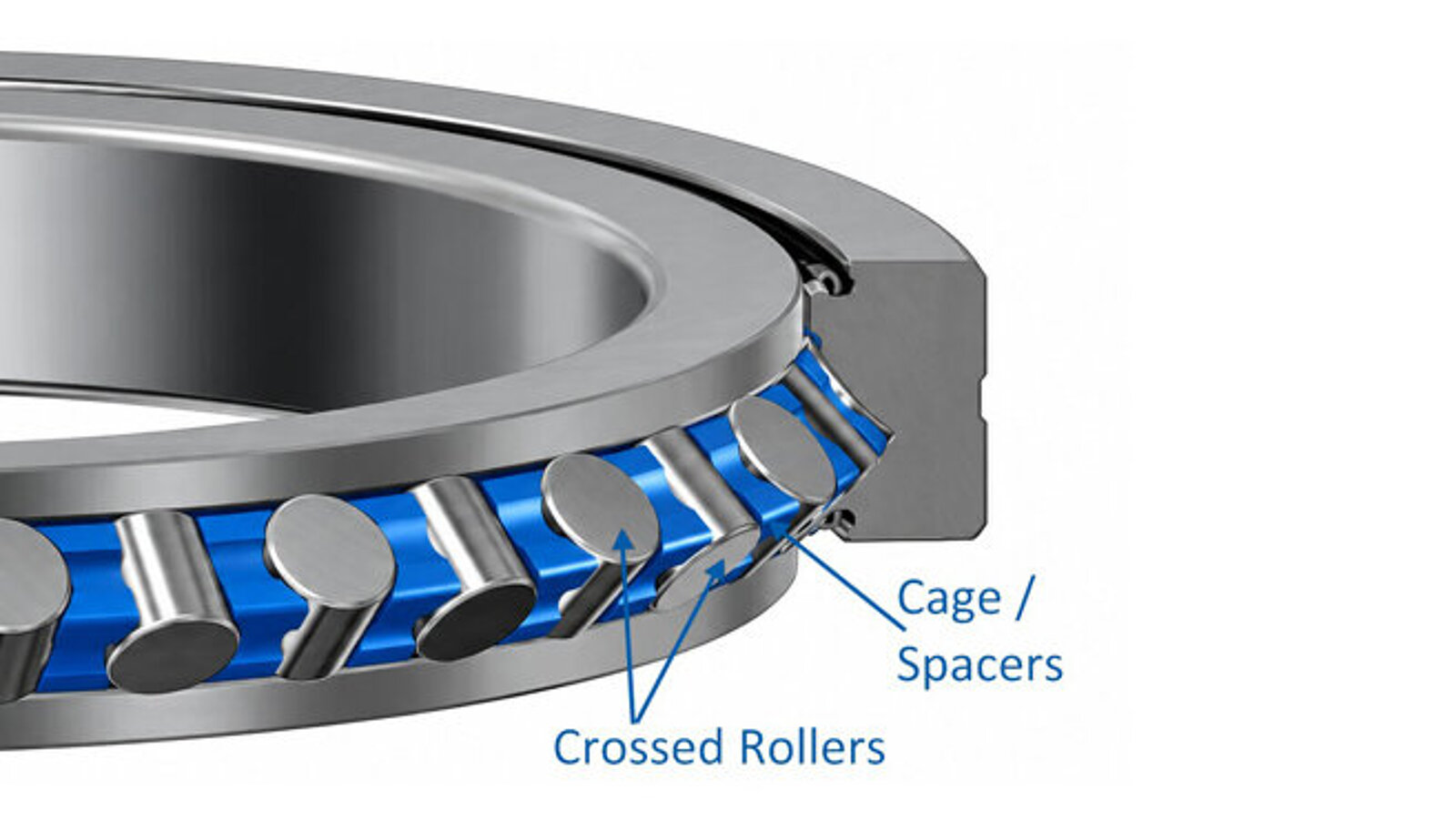
Instead of recirculating balls, they use cylindrical rollers arranged alternately at 90-degree orientations between precision bearing surfaces. This geometry provides better stiffness, since the line contact of a roller is stiffer than a point contact of a ball and supports loads and moments in multiple directions.
The bearing arrangement is especially useful for compact positioning stages where mechanical stability and precise guidance are priorities.
Compared with typical recirculating-bearing systems, crossed-roller stages can offer smoother travel because they avoid disturbances associated with ball recirculation. Their high stiffness also makes them attractive for applications involving demanding payloads or moment loads.
However, crossed-roller bearings still depend on mechanical contact. Friction and small geometric variations in the rolling elements remain considerations when extremely smooth scanning motion is required.
Traditional non-recirculating crossed-roller bearings also have practical limits on travel range and cage migration may be an issue with repetitive motion.
Key Characteristics
- High mechanical stiffness and load-carrying capability
- Smooth, precise linear guidance
- Good resistance to moment loads
- Compact mechanical construction
- Mechanical friction and contact remain present
- Additional degrees of freedom typically require separate modules
A crossed-roller XY stage, such as PI's V-781 precision positioning platform, can be combined with additional Z, rotary, or tip/tilt stages where required.
This approach works well when high precision is needed but the application does not justify a fully contactless motion system.
Typical applications: Precision optical alignment, microscopy, measurement equipment, semiconductor test, high-accuracy automation
Level 2: Air Bearings – Contactless Motion for Higher Precision
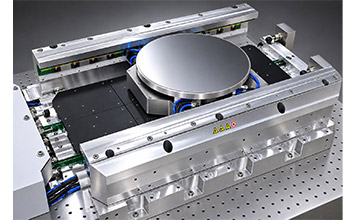
Air bearings eliminate mechanical contact between the moving platform and its guide surfaces. Instead, a thin, pressurized air film supports and guides the moving components. In the graphic, this is the second tier from the top, with very high precision and near-frictionless motion, though it needs an air supply and separate ancillary axes.
Removing rolling contact virtually eliminates bearing friction, wear, and mechanical disturbances caused by rolling elements.
The result is exceptionally smooth motion with excellent straightness, flatness, and repeatability potential.
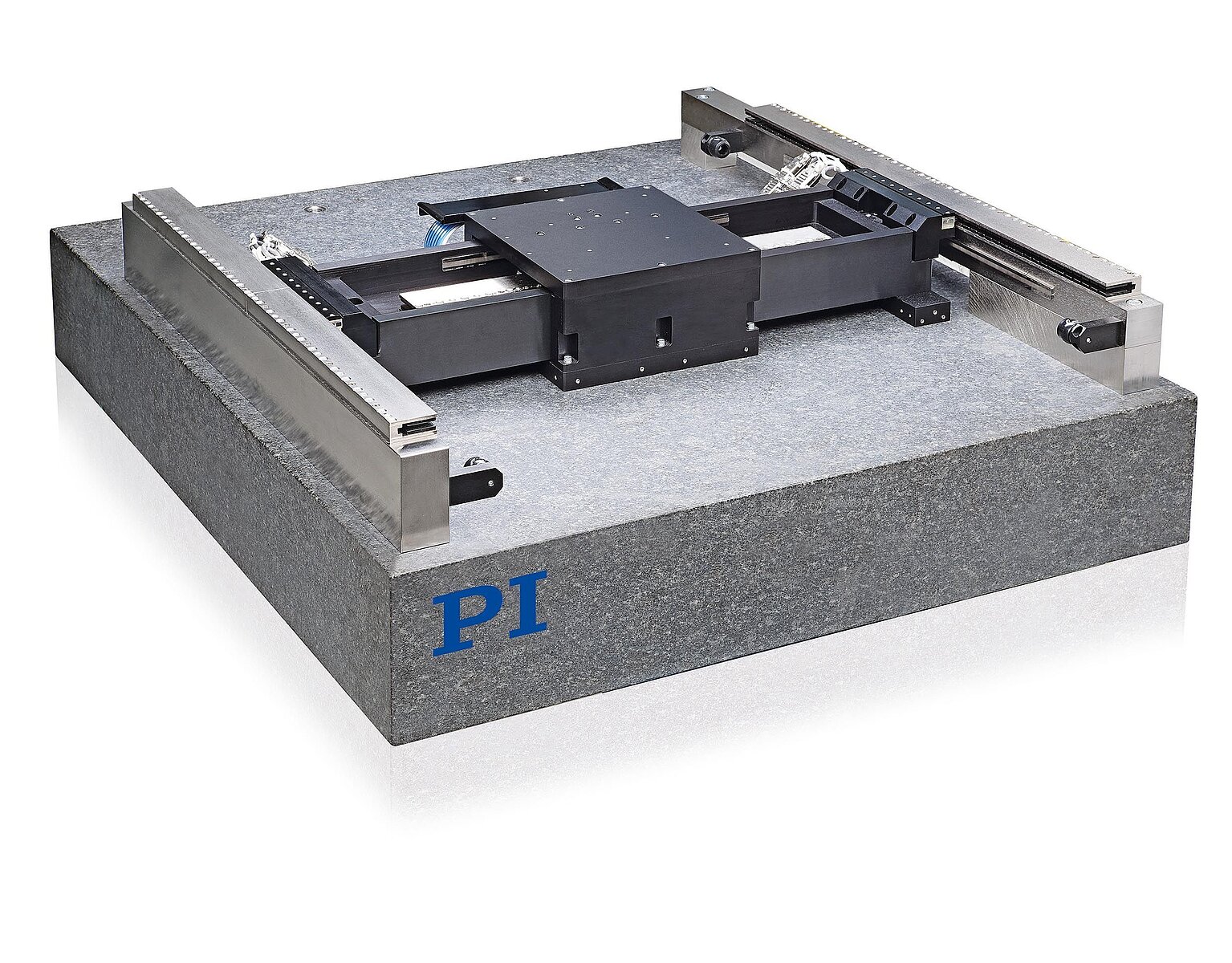
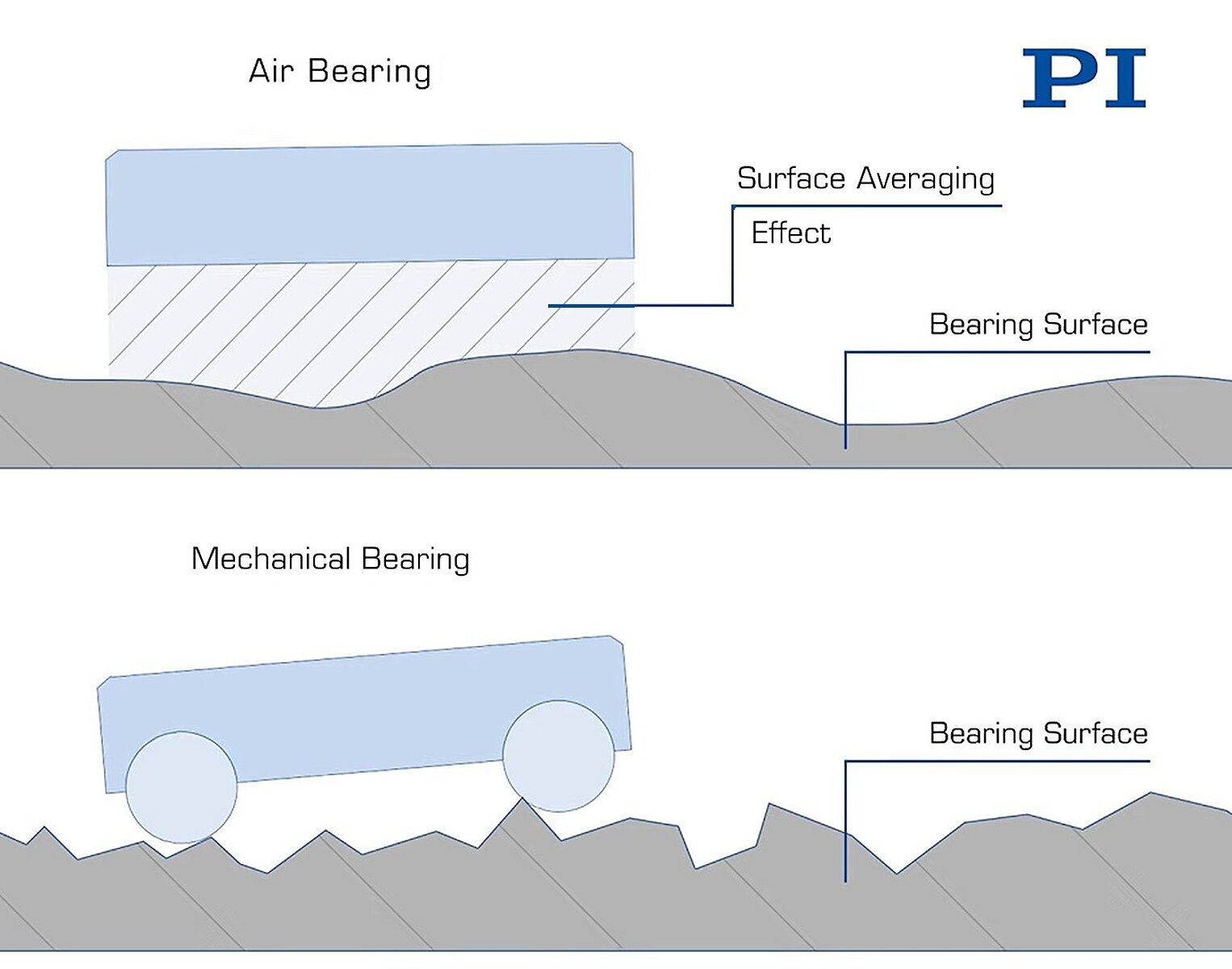
Air-bearing stages are particularly valuable in semiconductor inspection, metrology, high-resolution scanning, and applications where friction, and particle generation affect measurement quality.
When combined with direct-drive motors and high-resolution feedback, air-bearing stages can deliver high velocities, accelerations, and precise trajectory control.
True Planar Motion
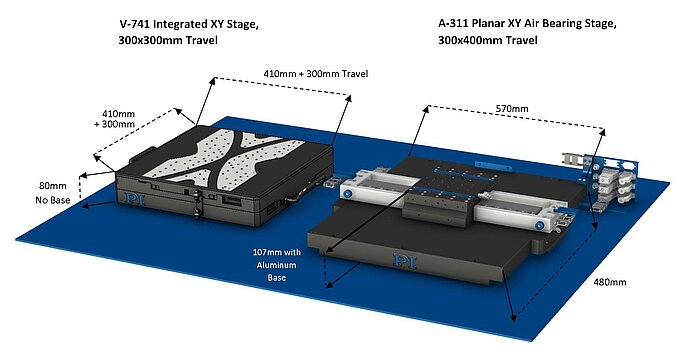
In contrast to mechanical bearing stages, air bearings can also be used to provide true planar XY and XY-theta motion. All axes move in reference to the same base plate. While integrated mechanical XY-stages are often called planar stages, motion occurs in two planes, and the motion of the top plane inherits all geometric errors of the bottom plane.
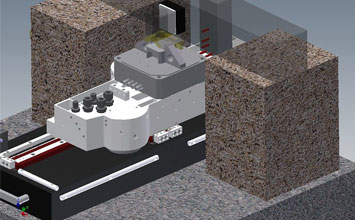
PI's A-323 planar air-bearing scanner illustrates how mechanical architecture can further improve system performance. By lowering the work-piece CG with a split beam architecture, which optimizes the drive and encoder arrangement, the system can reduce unwanted moments during acceleration and deceleration.
Separating reaction forces from the moving platform and improving thermal management can also help reduce settling times and support higher throughput.
Key Characteristics
- Near-frictionless, contactless motion
- Excellent smoothness and geometric motion quality
- Minimal bearing wear and particle generation
- High precision over substantial travel ranges
- Excellent potential for high-speed scanning and positioning
- Requires a clean, regulated compressed-air supply
- Additional independently controlled axes often require separate stages
Air bearings are a major performance step beyond conventional rolling-element guidance, but multi-axis integration can still present challenges.
A planar XY air-bearing stage can be combined with an air-bearing Z-lift module, tip/tilt stage, and rotary stage. Although each module may provide exceptional performance, the overall assembly becomes larger and mechanically more complex.
Each additional stage can introduce mechanical interfaces, moving mass, structural resonances, and geometric alignment considerations. Air-bearing systems with specially designed multi-axis mechanisms and active compensation can reduce some of these limitations, but they generally require more complex mechanical arrangements.
Typical applications: Wafer inspection, semiconductor metrology, high-precision scanning, optical measurement, laser processing, advanced manufacturing
Level 1: Magnetic Levitation – Integrated Multi-DOF Precision Motion
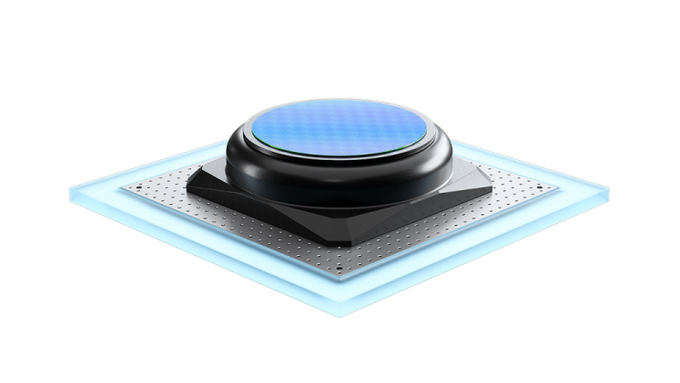
Magnetic levitation represents a fundamentally different approach to stage guidance. In the graphic, this is the top of the pyramid, with the highest overall performance and multi-axis motion built into a single platform.
Instead of constraining motion through mechanical rails or pressurized air films, MagLev systems use magnetic forces to support, position, and control a moving platform. There is no mechanical contact between the levitated platform and its stationary support structure during normal operation. More importantly, magnetic levitation can provide active control over multiple degrees of freedom within a single motion platform.
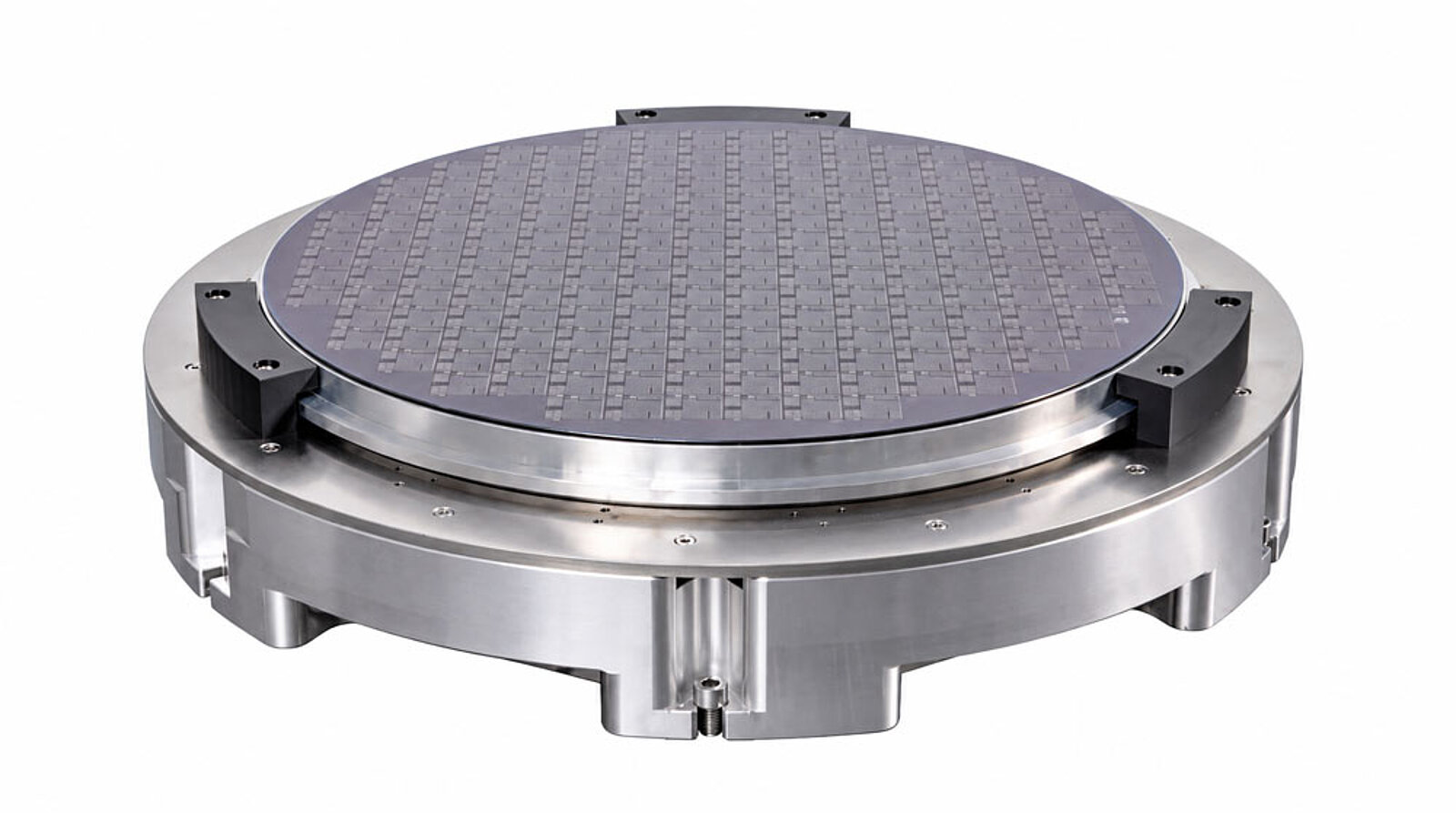
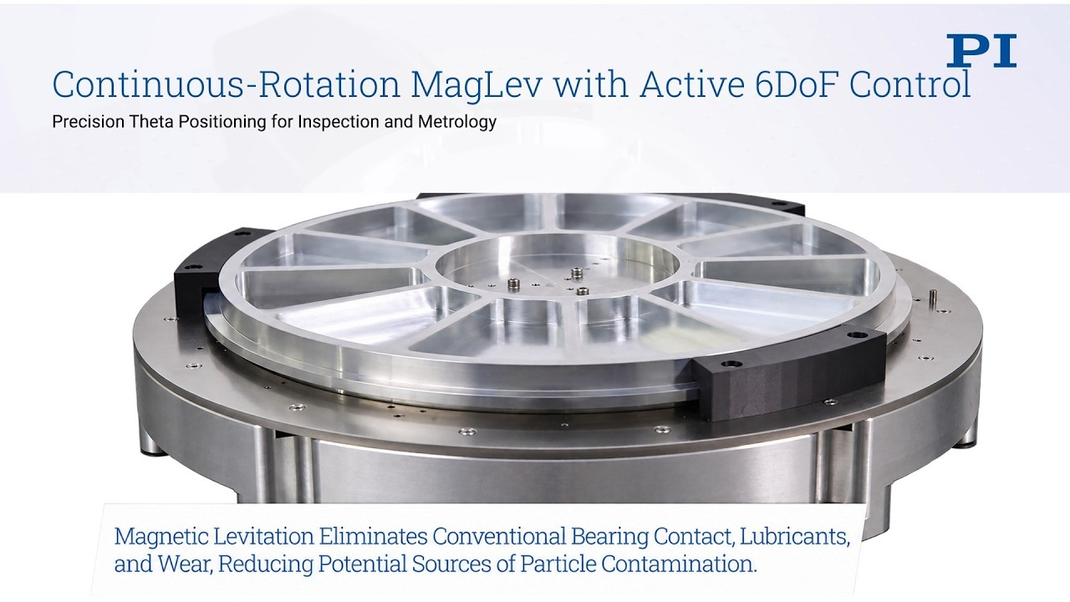
A suitably designed MagLev stage can control X, Y, and Z translation, together with rotation around the X, Y, and Z axes. This automatically provides degrees of freedom that would traditionally require additional mechanical stages.
For example, a planar MagLev stage may provide long-range XY positioning while simultaneously making small Z, tip/tilt, and rotational corrections.
This can eliminate the need to stack additional correction stages above the primary positioning system.

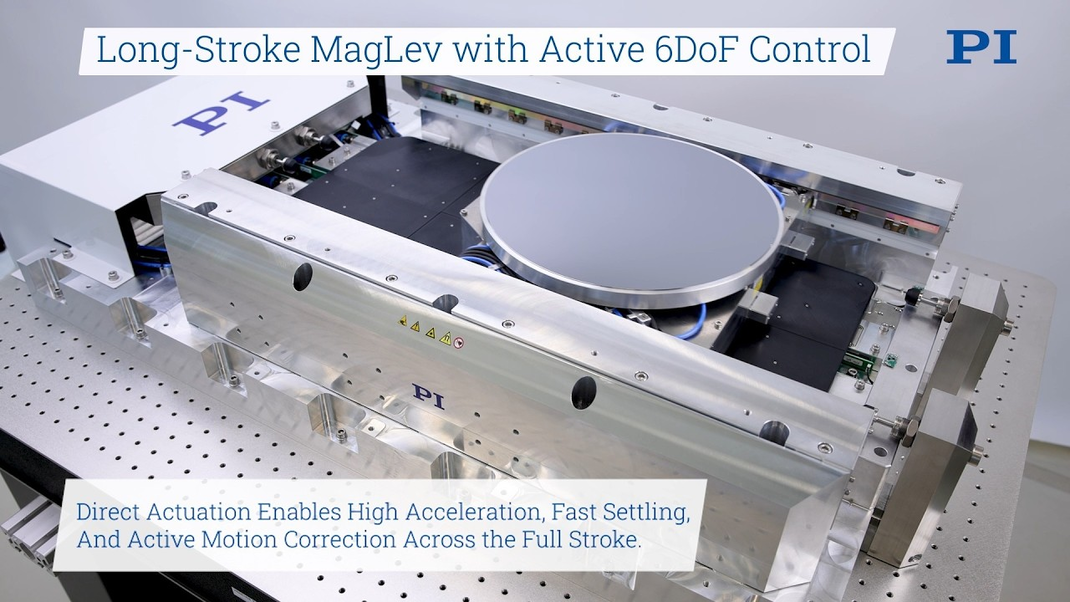
In conventional bearing systems, motion quality depends heavily on the geometry and mechanical accuracy of the guide surfaces.
MagLev systems rely on precision sensors and multi-axis feedback control to maintain the platform's desired position and orientation. The control system can actively compensate for unwanted motion, including small changes in height and angular orientation.
For example, a wafer scanning system may require XY movement while holding the wafer surface at a tightly controlled height and angle relative to an optical measurement head. A MagLev platform can potentially perform these tasks simultaneously through coordinated magnetic control.
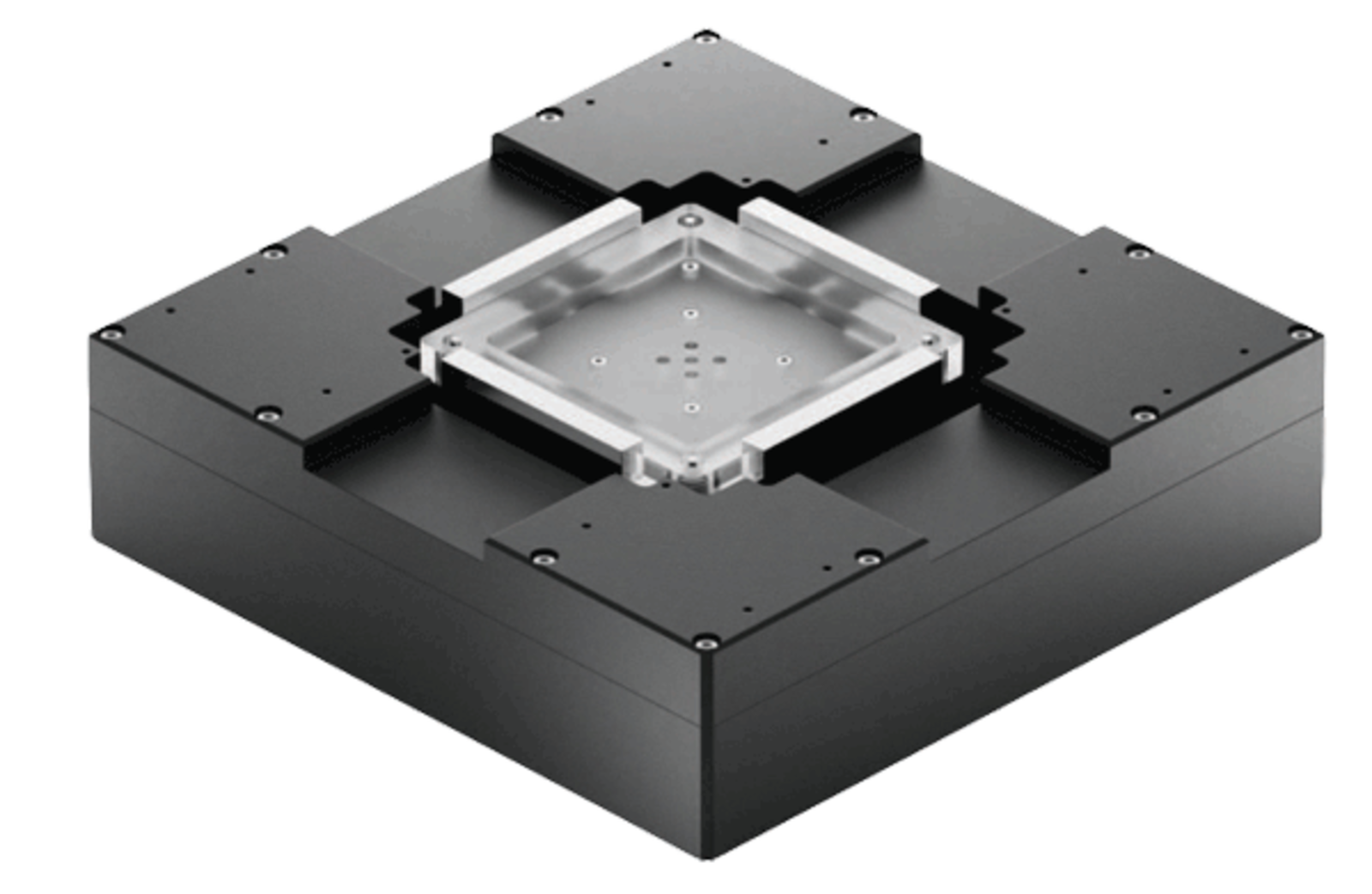
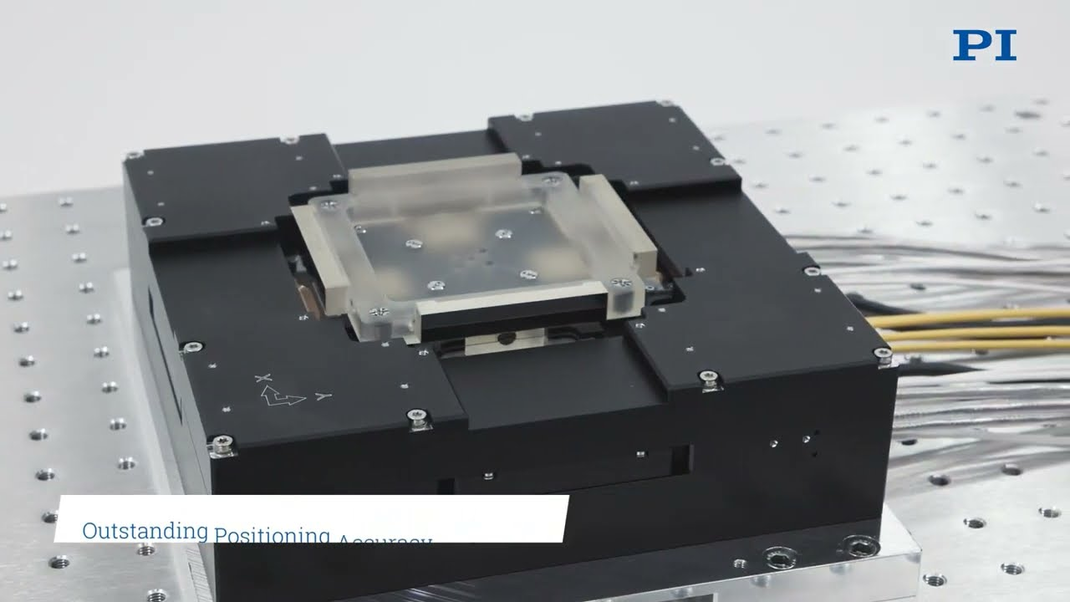
The absence of mechanical bearing contact also eliminates rolling-element disturbances and greatly reduces mechanical wear and associated particle generation.
Key Characteristics
- Contactless magnetic suspension and guidance
- No bearing friction or mechanical wear during levitated operation
- Integrated multi-degree-of-freedom motion capability
- Active correction of translation and angular errors
- Excellent potential for smooth, high-dynamic motion
- Reduced need for separate correction stages
- Potentially lower moving mass and fewer mechanical interfaces
- Requires sophisticated multi-axis sensing, power electronics, and control
MagLev also offers opportunities in environments where compressed-air systems are undesirable, although vacuum compatibility depends on the specific design, materials, thermal management, and electrical configuration.
The new technology introduces its own engineering challenges. Active suspension consumes electrical power, requires continuous closed-loop control, and must address heat generation, payload stability, controller bandwidth, and safe behavior during power loss. Consequently, MagLev is not automatically the best solution for every application. Its strongest advantages emerge when contactless motion, active error correction, and integrated multi-axis positioning are central to the process.
Typical applications: Advanced wafer inspection, nanoscale metrology, high-throughput scanning, semiconductor manufacturing, precision optical positioning, emerging multi-axis manufacturing processes
Adding Degrees of Freedom: The Hidden Cost of Conventional Motion Systems
The performance comparison becomes particularly interesting when applications require more than basic X and Y motion.
Consider an inspection machine that must position a substrate in X and Y, adjust its focus in Z, correct angular alignment in tip and tilt, and rotate the substrate around its vertical axis.
That represents six degrees of freedom.
With conventional recirculating-bearing, crossed-roller, or air-bearing stages, the system may use separate modules for these functions.
Such modular systems are flexible and well established, but every additional axis introduces design considerations:
- Increased stack height and moving mass
- More mechanical interfaces and mounting hardware
- Additional drive electronics, feedback devices, and cables
- Greater potential for accumulated geometric errors
- Structural dynamics that can influence settling behavior
- Additional installation, alignment, and calibration effort
Stacking stages also moves the working point farther away from some position measurement references, potentially increasing Abbe errors when small angular deviations occur. MagLev can address several of these challenges by integrating motion and active correction into a common platform.
The main benefit is not simply having more axes. It is the ability to control multiple degrees of freedom without necessarily adding separate mechanical positioning assemblies. In practice, available travel ranges and control authority differ substantially between axes. A MagLev stage designed for long XY travel may provide only relatively small Z and angular correction ranges.
That can still be sufficient for focus adjustment, wafer leveling, trajectory correction, or compensation of small alignment errors.
Comparing the Four Motion Technologies
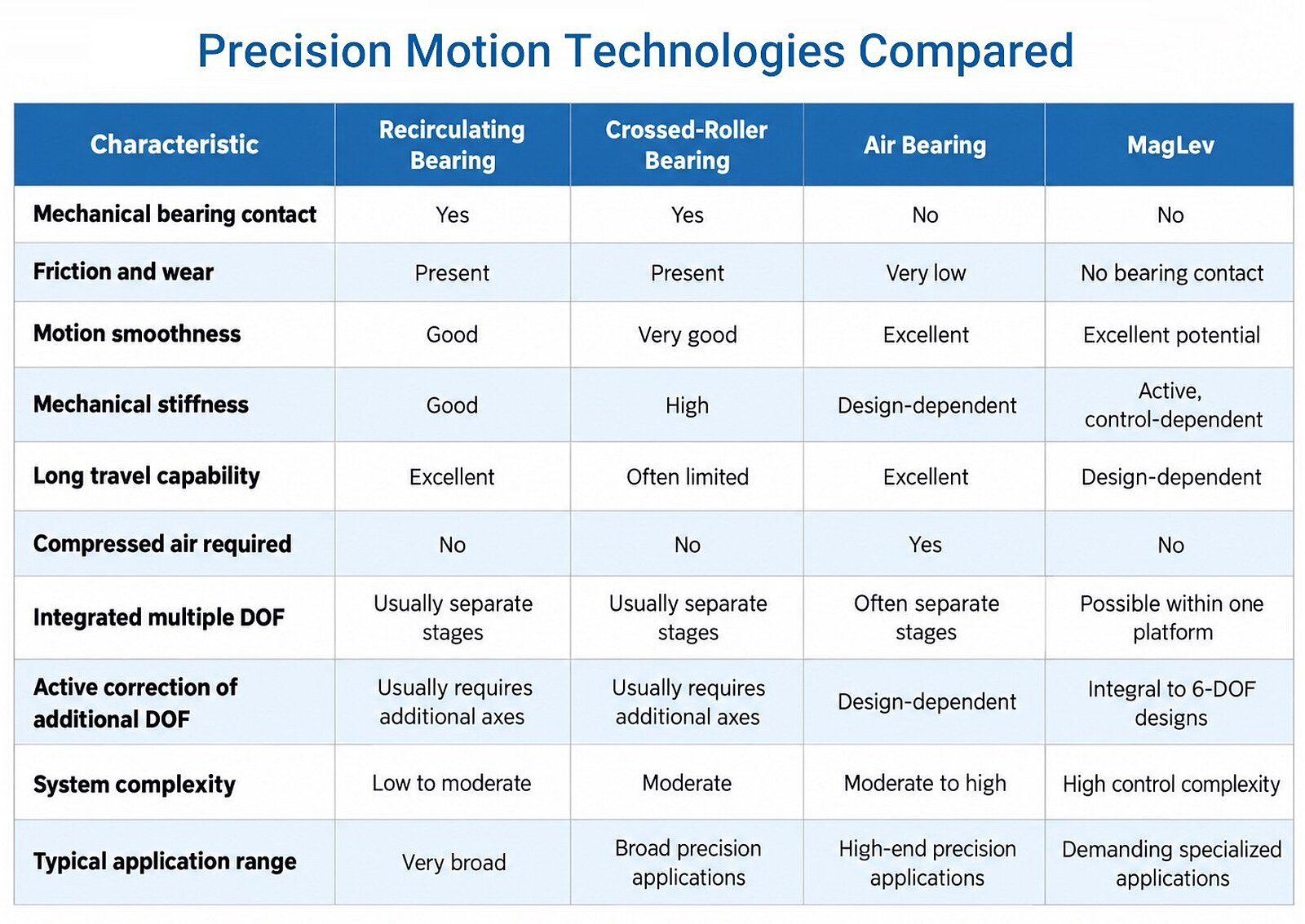
Which Technology Provides the Best Performance?
There is no universally best bearing technology. The right choice depends on the performance characteristics that matter most to the application.
Recirculating bearings offer a strong combination of practicality, long travel, robustness, and cost-effectiveness.
Crossed-roller bearings are attractive when higher mechanical stiffness and smooth precision guidance are required within a compact stage design.
Air bearings are preferred when extremely smooth, nearly frictionless motion and excellent geometric performance justify the additional compressed-air infrastructure.
Magnetic levitation becomes particularly attractive when the application requires contactless motion combined with multi-axis positioning, active error correction, and a highly integrated stage architecture.
One important distinction is that positioning resolution alone does not determine a stage's performance level. A mechanically guided stage with a high-resolution encoder can achieve extremely small, commanded steps, but resolution does not necessarily describe repeatability of step size, motion smoothness, constancy of velocity, dynamic tracking accuracy, or behavior under changing loads.
Engineers should evaluate performance at the working point, including geometric performance, such as straightness, flatness, angular errors, and other factors, such as settling time, vibration and thermal stability, and the interaction between axes.
For advanced inspection and metrology applications, these characteristics can be more important than a single headline resolution specification.
Looking Ahead: Motion Technology Is Becoming More Integrated
The progression from mechanical bearings to air bearings and magnetic levitation reflects a broader development in precision motion technology.
Where traditional systems depend primarily on mechanical guidance to constrain unwanted movement, increasingly sophisticated motion platforms combine high-resolution sensing, direct-drive actuation, and real-time control to manage motion actively.
Magnetic levitation takes this concept further by making multiple degrees of freedom available within a single contactless positioning system. This does not eliminate the need for conventional bearing technologies. Recirculating, crossed-roller, and air-bearing stages will continue to serve many applications where they offer the best balance of cost, payload, travel range, precision, and integration effort.
However, as semiconductor inspection, metrology, and advanced manufacturing place greater demands on precision and throughput, integrated multi-DOF motion control offers new opportunities to simplify machine architectures while addressing performance limitations.
The important question is no longer just how accurately a stage moves along its intended axis, but how effectively it controls all the motion that matters to the process.
Discuss Your Precision Motion Application with PI
Whether your application calls for robust long-travel positioning, high-stiffness mechanical guidance, ultra-smooth air-bearing motion, or integrated six-degree-of-freedom magnetic levitation, PI can help evaluate the appropriate technology.
From individual positioning stages to integrated multi-axis motion systems, PI engineers will work with you to optimize precision, dynamics, travel range, payload capacity, and control architecture for demanding industrial and scientific applications.
Discuss your application with a PI Expert to explore the most appropriate precision motion platform for your system.




Blog Categories
- Aero-Space
- Air Bearing Stages, Components, Systems
- Astronomy
- Automation, Nano-Automation
- Beamline Instrumentation
- Bio-Medical
- Hexapods
- Imaging & Microscopy
- Laser Machining, Processing
- Linear Actuators
- Linear Motor, Positioning System
- Metrology
- Microscopy
- Motorized Precision Positioners
- Multi-Axis Motion
- NanoAutomation
- Nanopositioning
- Photonics
- Piezo Actuators, Motors
- Piezo Mechanics
- Piezo Transducers / Sensors
- Precision Machining
- Semicon
- Software Tools
- UHV Positioning Stage
- Voice Coil Linear Actuator
- X-Ray Spectroscopy