Hexapods and Precision Motion Stages Advance Microfluidic 3D Printing
Microfluidic 3D printing requires extreme precision. Learn how PI’s hexapods and motion stages enabled researchers to create a record-setting device with 11,200 valves and 7 μm pores.
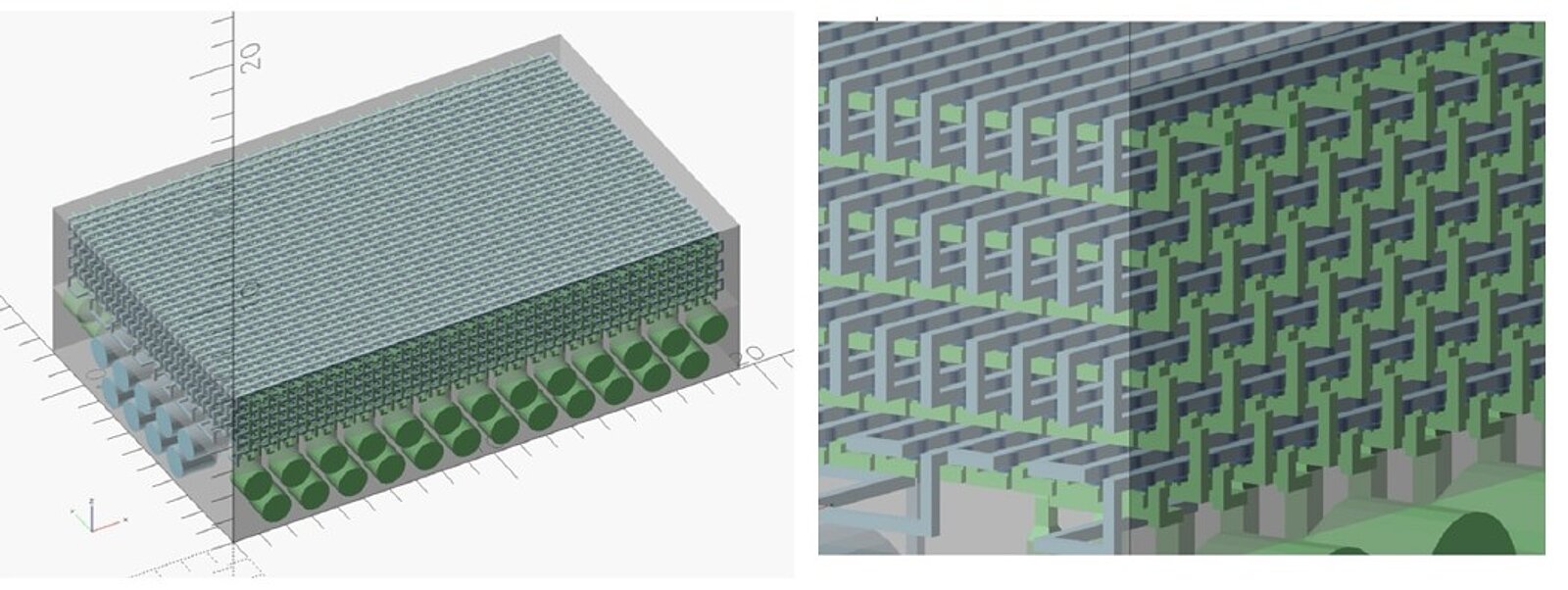
Researchers at Brigham Young University recently demonstrated a significant advance in microfluidic additive manufacturing, producing a device containing 11,200 functional membrane valves and an array of 198 highly uniform isoporous membranes with 7-micron pores. The work addresses several long-standing challenges in high-resolution 3D printing, including bubble formation, exposure non-uniformity, and process repeatability.
At the heart of the custom printing platform is a precision motion system from PI, consisting of a PI H-824 compact hexapod, two V-817 precision stages in an XY configuration, and an L-511 Z-stage, integrated into the optical projection assembly.
The Challenge of Printing Complex Microfluidic Devices
Microfluidic devices often contain channels, valves, membranes, and fluid-control structures with dimensions measured in only a few microns. Producing these features reliably across an entire build area is difficult because even small variations in optical focus, illumination, or mechanical stability can affect print quality.
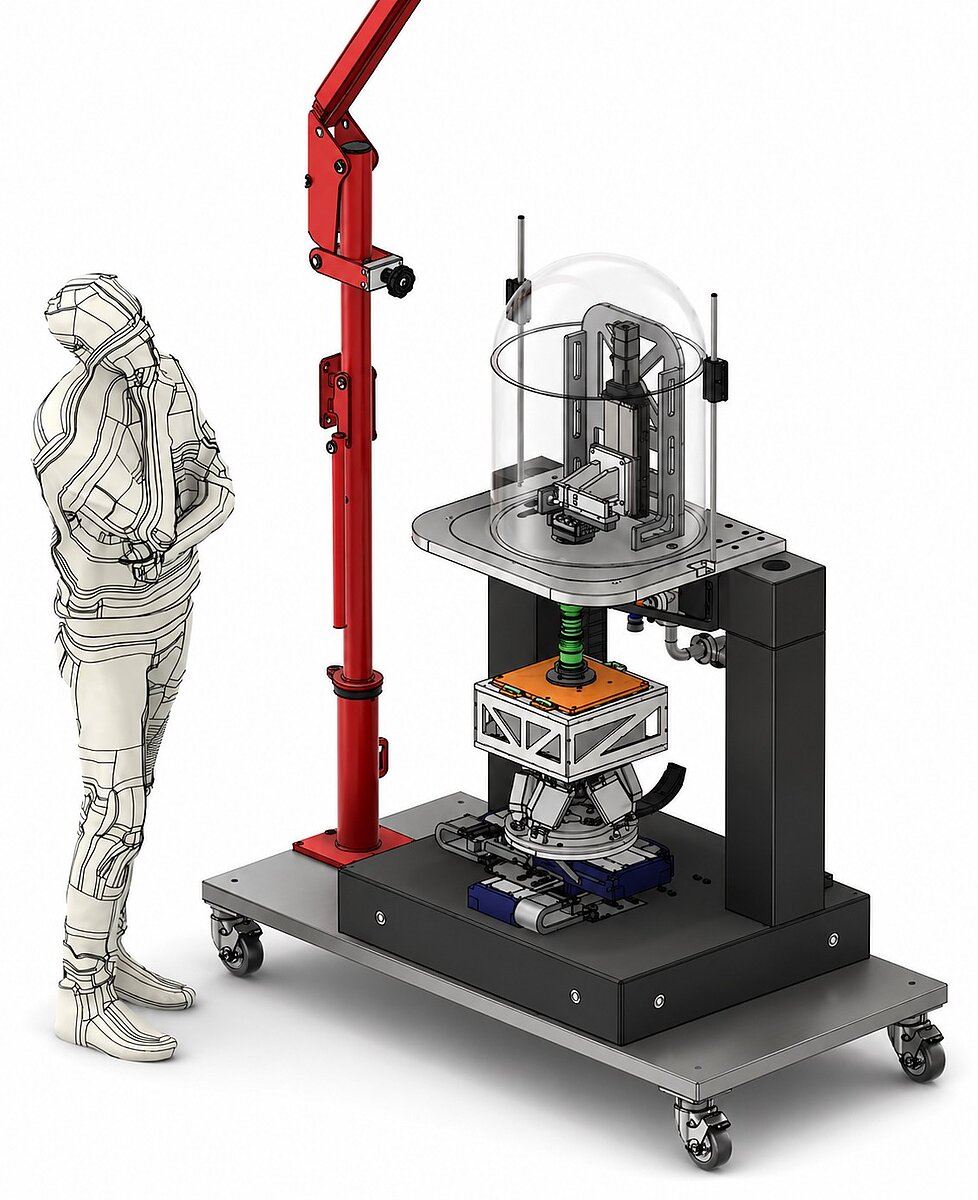
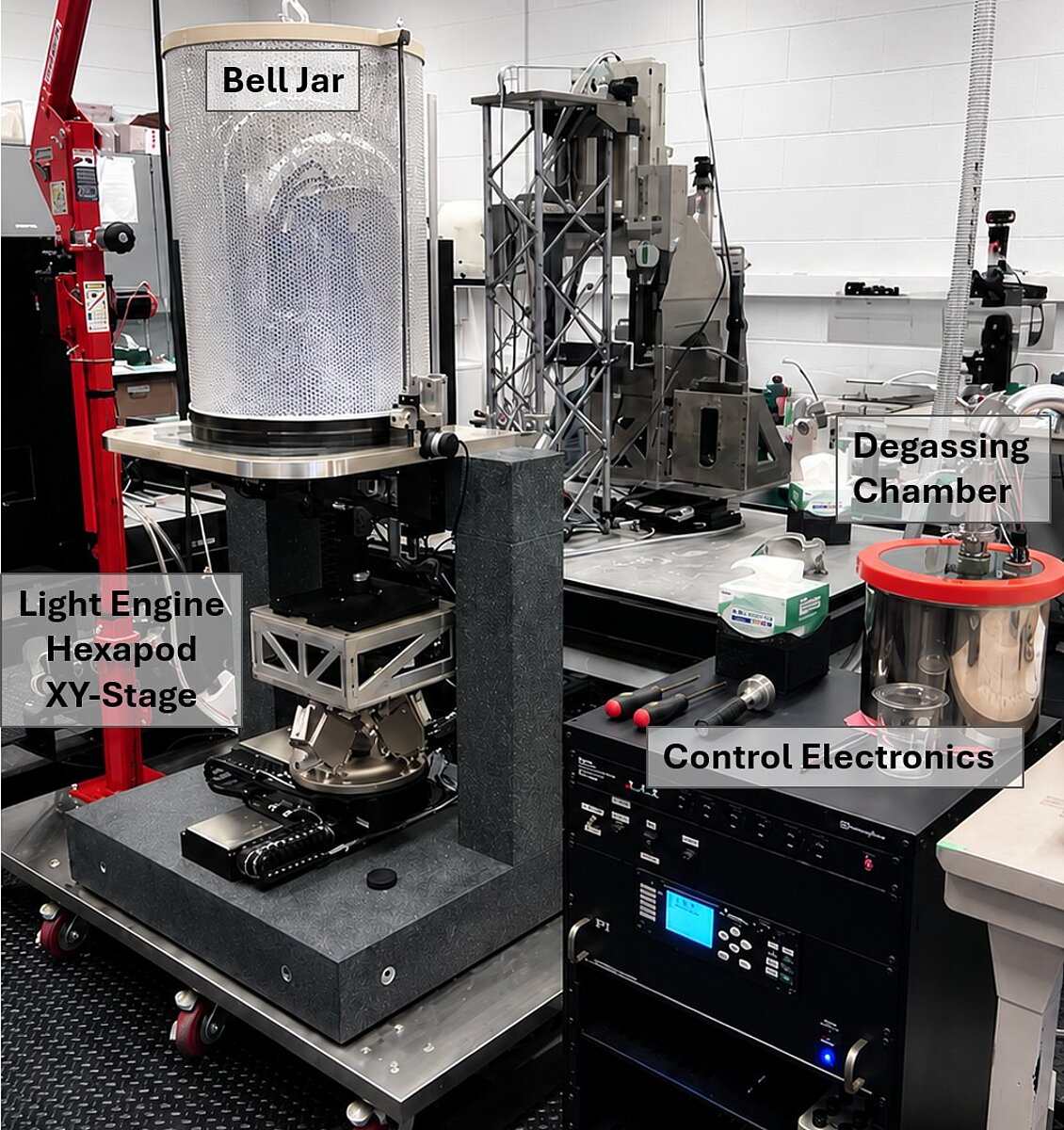
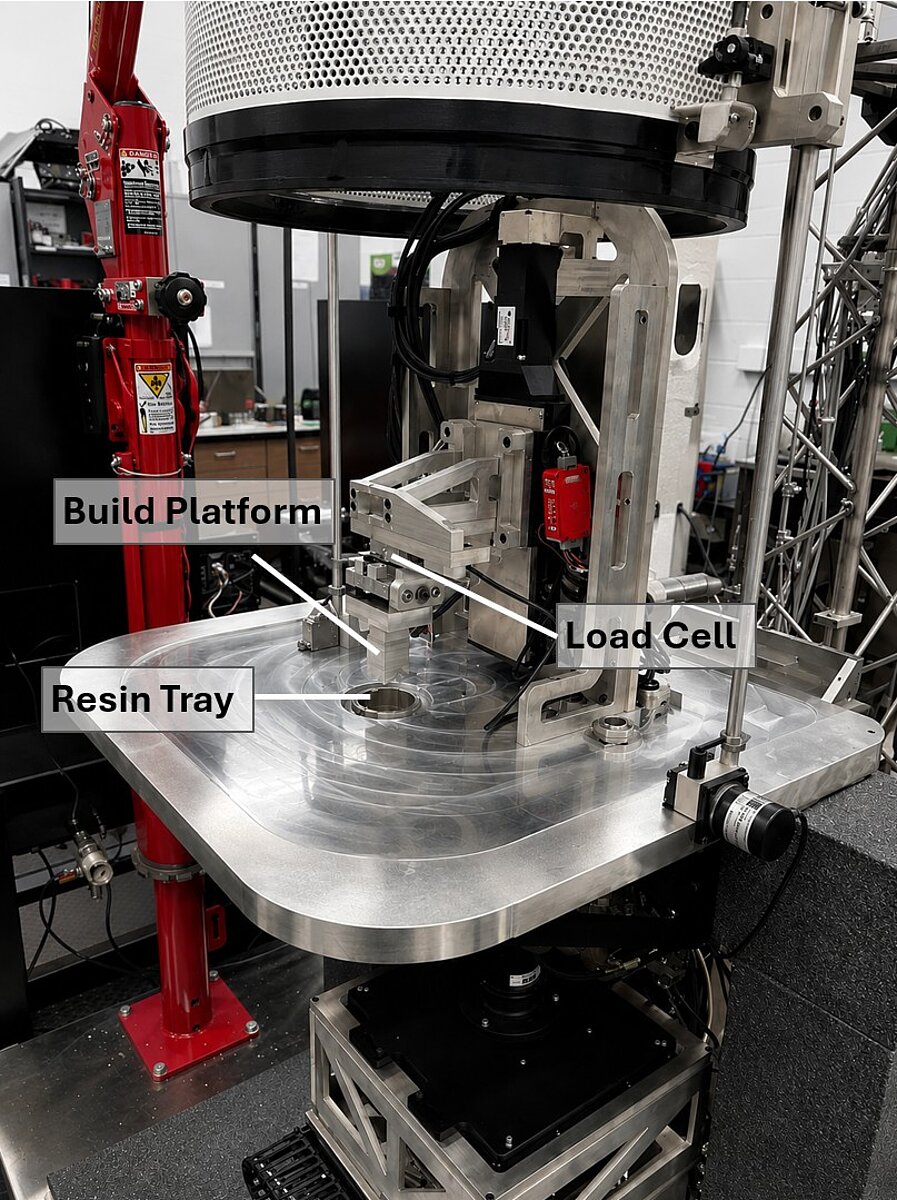
The researchers developed a custom DLP-based stereolithography printer designed specifically for high-resolution microfluidic fabrication. The system combines vacuum-assisted resin processing, grayscale irradiance correction, optimized resin chemistry, and precision motion control to achieve highly repeatable results.
Using this platform, the team successfully fabricated:
- 11,200 functional membrane valves in a single multilayer device
- 198 isoporous membranes with uniform 7 µm pores
- High-density three-dimensional microfluidic architectures
- Near-perfect membrane yields across the full print area
Why Optical Alignment Is Critical
The printer uses a high-resolution projection system that exposes photopolymer resin, layer by layer. The projected image has a pixel size of approximately 7.6 µm, requiring precise optical alignment to maintain consistent feature quality across the entire build area.
As feature sizes decrease, maintaining proper focus and image uniformity becomes increasingly important. Small alignment errors can lead to variations in feature dimensions, inconsistent membrane formation, and reduced manufacturing yield.
The researchers used detailed irradiance mapping and grayscale correction techniques to improve exposure uniformity across the projected image. This process reduced illumination variation to a normalized standard deviation of only 0.18%, helping achieve consistent fabrication results across the entire build area.
For this reason, the optical projection engine makes use of a 9-DOF precision positioning system that enables accurate alignment and focus adjustment.
The Role of the Hexapod
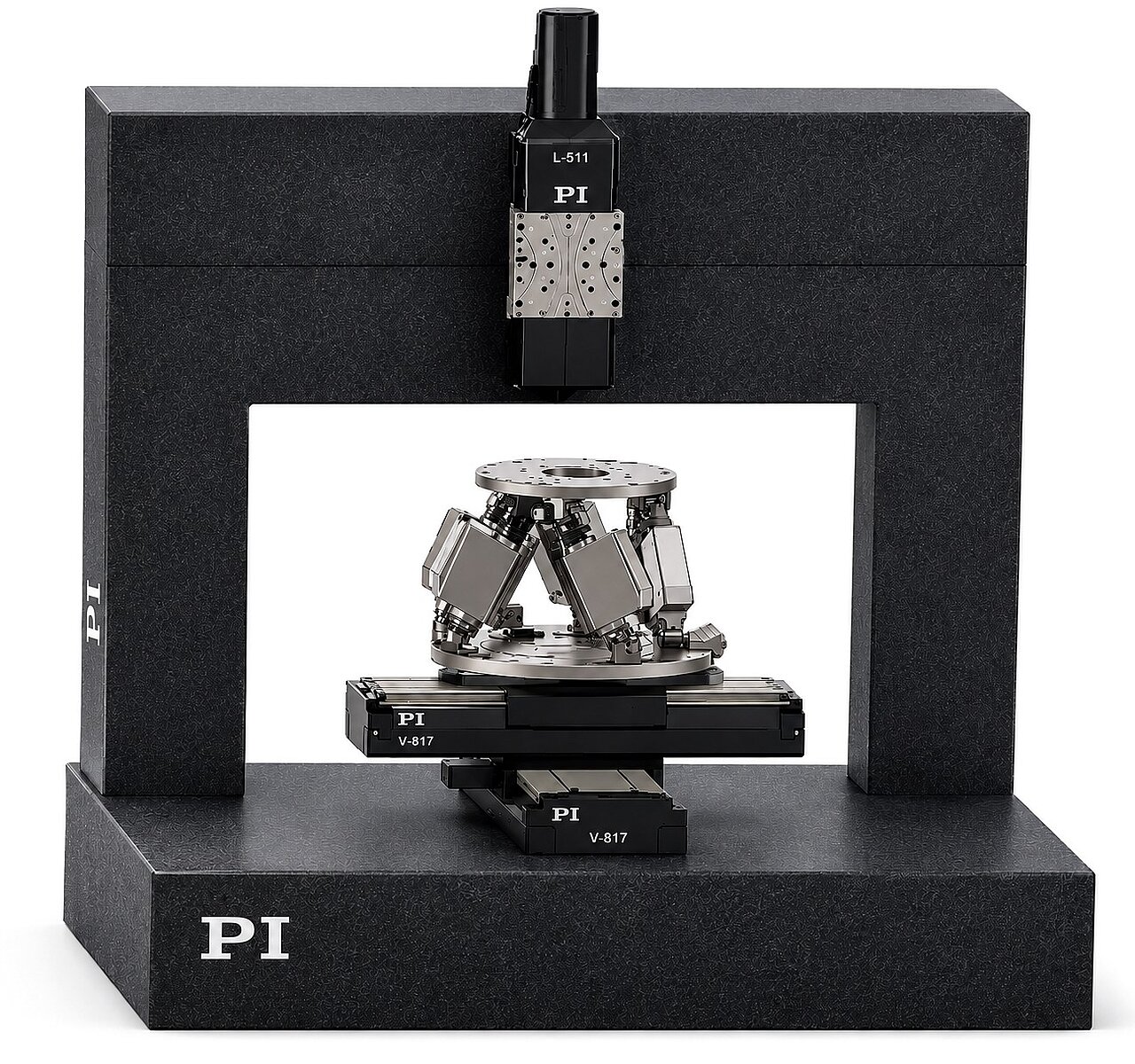
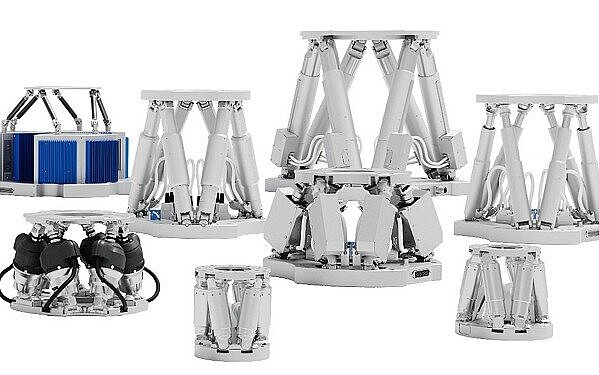
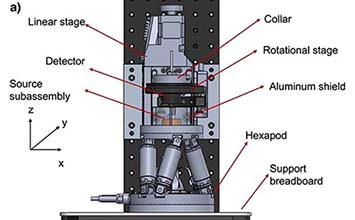
The projection optics are mounted on a PI H-824 hexapod 6-axis micropositioning system. A hexapod provides motion in three linear and three rotary degrees of freedom: X, Y, Z and Pitch, Yaw, Roll.
In this application, the hexapod serves as a highly precise optical alignment and fine focus-adjustment platform. A parallel-kinematic hexapod with advanced controls can position and orient a sample simultaneously in all six degrees of freedom, while allowing the user to freely program the center of rotation (pivot point). This capability is particularly valuable in advanced optical systems where maintaining alignment and focus is essential to achieving uniform printing performance.
The Function of the Precision XY Stages
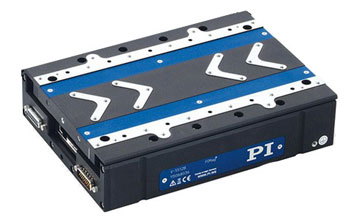
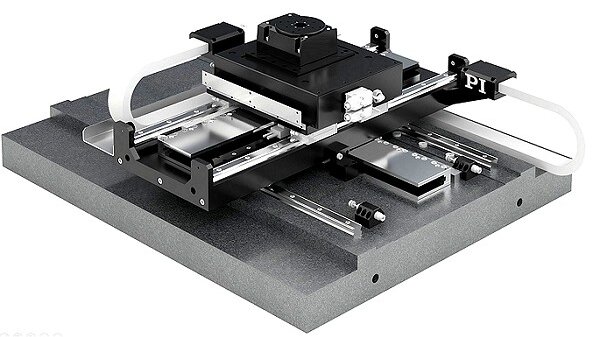
The hexapod assembly is mounted on two V-817 linear motor positioning stages in an XY configuration. These stages act as linear range extenders, adding 200 × 200 mm of translational travel to the optical system. Together with the hexapod, the micropositioning stages form part of the printer’s motion architecture, supporting setup, calibration, and accurate positioning of the projection optics relative to the print area and measurement systems.
The Motorized Z-Stage – Layer Control
The build platform is driven by a custom-tuned L-511 precision linear stage (model L-511C015) based on a brushless servo motor with brake and absolute rotary encoder, driving a ball-screw. This vertical positioning stage controls the layer-by-layer motion required for stereolithography printing. In addition to accurately positioning the build platform in the Z-axis, the stage supports a load-cell-equipped build platform that allows the researchers to monitor separation forces during printing. These measurements provide valuable insight into peel forces, resin behavior, and process stability, helping optimize print quality and yield for complex microfluidic devices.
Advanced Motion Controllers and Positioning Performance
The motion system was completed with a C-887.52 6D hexapod controller and A-814, 4-Axis EtherCat motion controller with integrated quiet drive modules and advanced motion profiling for enhanced dynamics. The hexapod provides 1µm resolution, 25mm/sec velocity, and 0.5µm repeatability, while the linear stages and Z-stage provide even higher precision.
Mechanical Stability Matters
Another important aspect of the printer design is mechanical stability. The motion system and optical assembly are mounted on a granite base that provides vibration damping and helps maintain alignment during printing. The build platform with the Z-stage is situated on top of the granite bridge.
When producing microfluidic features measured in only a few microns, vibration and mechanical drift can become significant sources of error. Combining a stable mechanical platform with precision motion control helps preserve optical performance and process repeatability.
Enabling a New Generation of Microfluidics
The most significant advances reported in the study come from the combination of several innovations:
- Vacuum-assisted resin processing
- Resin degassing
- Optimized photopolymer chemistry
- Grayscale irradiance correction
- Precision optical alignment and positioning
Together, these improvements enabled the fabrication of microfluidic devices with unprecedented density and uniformity. The researchers demonstrated fully functional multilayer valve structures and highly uniform porous membranes across large print areas, capabilities that could support future applications in biomedical diagnostics, organ-on-chip systems, drug discovery, and lab-on-a-chip technologies.
Precision Motion as an Enabling Technology
As additive manufacturing systems continue to push toward smaller features and higher levels of integration, precision motion control is becoming increasingly important. Advanced positioning systems, such as hexapods and precision linear positioning stages, provide the alignment, stability, and repeatability needed to support next-generation manufacturing technologies.
This work highlights how precision motion systems from PI can contribute to advanced research platforms, helping scientists and engineers overcome practical manufacturing challenges while expanding the capabilities of high-resolution 3D printing.
The full article is available here: Vacuum-enhanced high-resolution 3D printing yields 11 200 valves and uniform 7 μm isoporous membranes


Blog Categories
- Aero-Space
- Air Bearing Stages, Components, Systems
- Astronomy
- Automation, Nano-Automation
- Beamline Instrumentation
- Bio-Medical
- Hexapods
- Imaging & Microscopy
- Laser Machining, Processing
- Linear Actuators
- Linear Motor, Positioning System
- Metrology
- Microscopy
- Motorized Precision Positioners
- Multi-Axis Motion
- NanoAutomation
- Nanopositioning
- Photonics
- Piezo Actuators, Motors
- Piezo Mechanics
- Piezo Transducers / Sensors
- Precision Machining
- Semicon
- Software Tools
- UHV Positioning Stage
- Voice Coil Linear Actuator
- X-Ray Spectroscopy