6-Axis Fast Hexapod Powers Portable Computerized Dynamic Posturography and Balance Training System
Advanced Motion Control Solution Helps Injured Soldiers Regain their Balance
Human balance plays a critical role in everyday life, and assessing and rehabilitating balance is a critical concern for the US Military. Soldiers who sustain an injury, particularly traumatic brain injury (TBI) or musculoskeletal injury (MSKI), can experience a range of lasting effects, including impaired postural stability—essentially, the ability to maintain balance—which can be addressed through targeted testing and training. According to Health.mil, the official website of the Military Health system, more than 400,000 service members have experienced mild, moderate, or severe traumatic brain injuries (TBI) since 2000. These injuries commonly result in symptoms, such as dizziness, as well as vestibular and oculomotor dysfunction. MSKIs, including ligament damage, chronic ankle instability, and knee or ankle injuries, are also prevalent.
Posturography is a diagnostic method used to evaluate balance and stability, typically by measuring a person’s sway on a force platform. Traditionally, clinics have used tools, such as balance boards, to assess and train the somatosensory system. More recent advancements have incorporated the visual system through virtual reality (VR). However, current computerized dynamic posturography systems remain large, costly, primarily limited to diagnostic applications, and are constrained to sophisticated medical clinics. A system that could be used outside the bounds of a clinic could revolutionize the delivery of balance assessment and rehabilitation in both military and civilian settings.
An Innovative Approach Using Parallel Kinematics
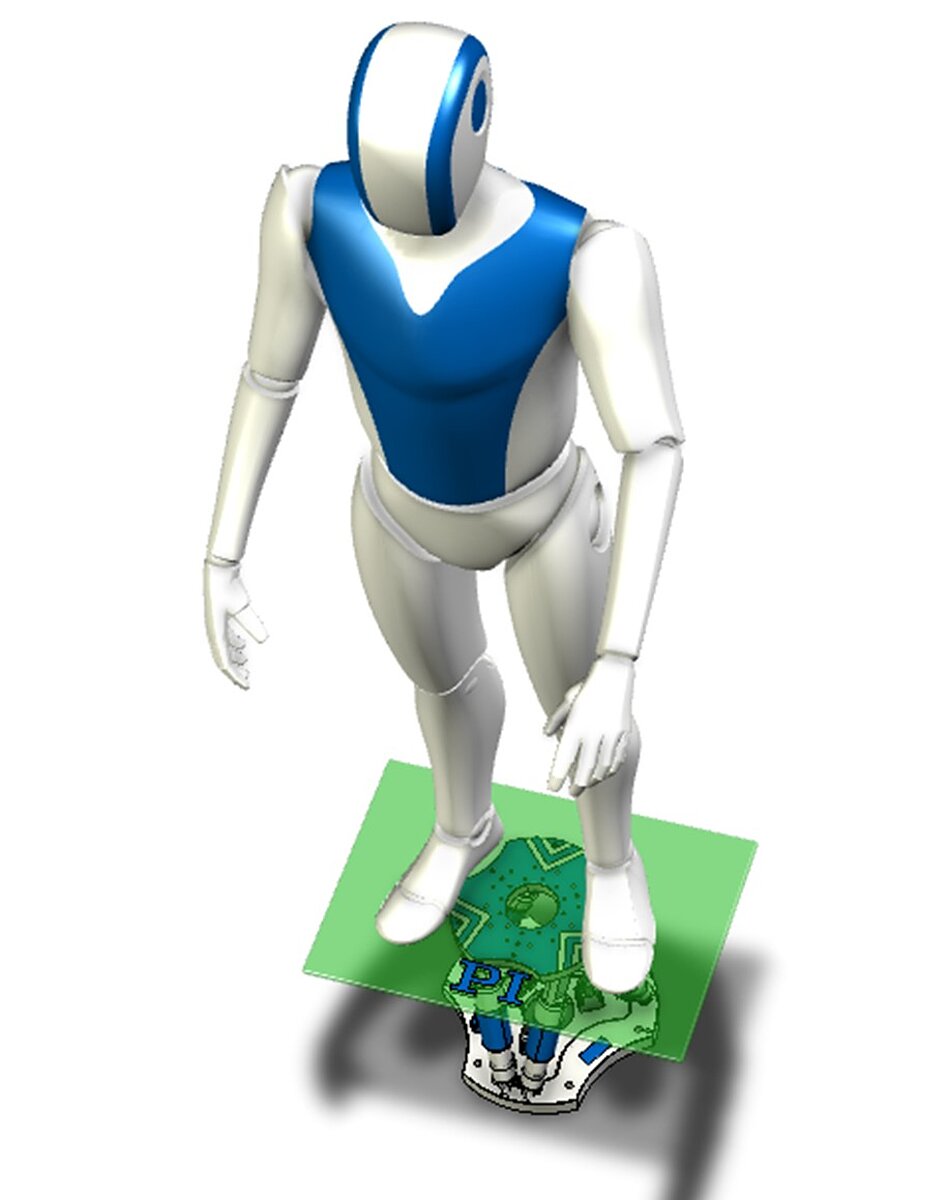
PI and Charles River Analytics (CRA) collaborated on the development of an innovative motion platform concept. CRA is a research and development company that specializes in solving complex human-machine teaming challenges through deep expertise in AI, machine learning, autonomous systems, human-system interfaces, and agile engineering across defense, healthcare, intelligence, space, and cybersecurity domains.
The objective was to create a compact, portable, and computerized system capable of performing Sensory Organization Tests (SOTs) for balance measurement and training in clinical, home, and field settings.
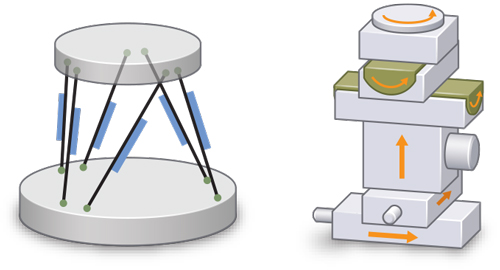
To meet this goal, a new hexapod-based approach was explored. A hexapod—also known as a Stewart-Gough platform—is a parallel-kinematic robotic mechanism that enables precise six-degree-of-freedom (6-DoF) motion: three rotational axes (pitch, roll, yaw) and three translational axes (X, Y, Z).
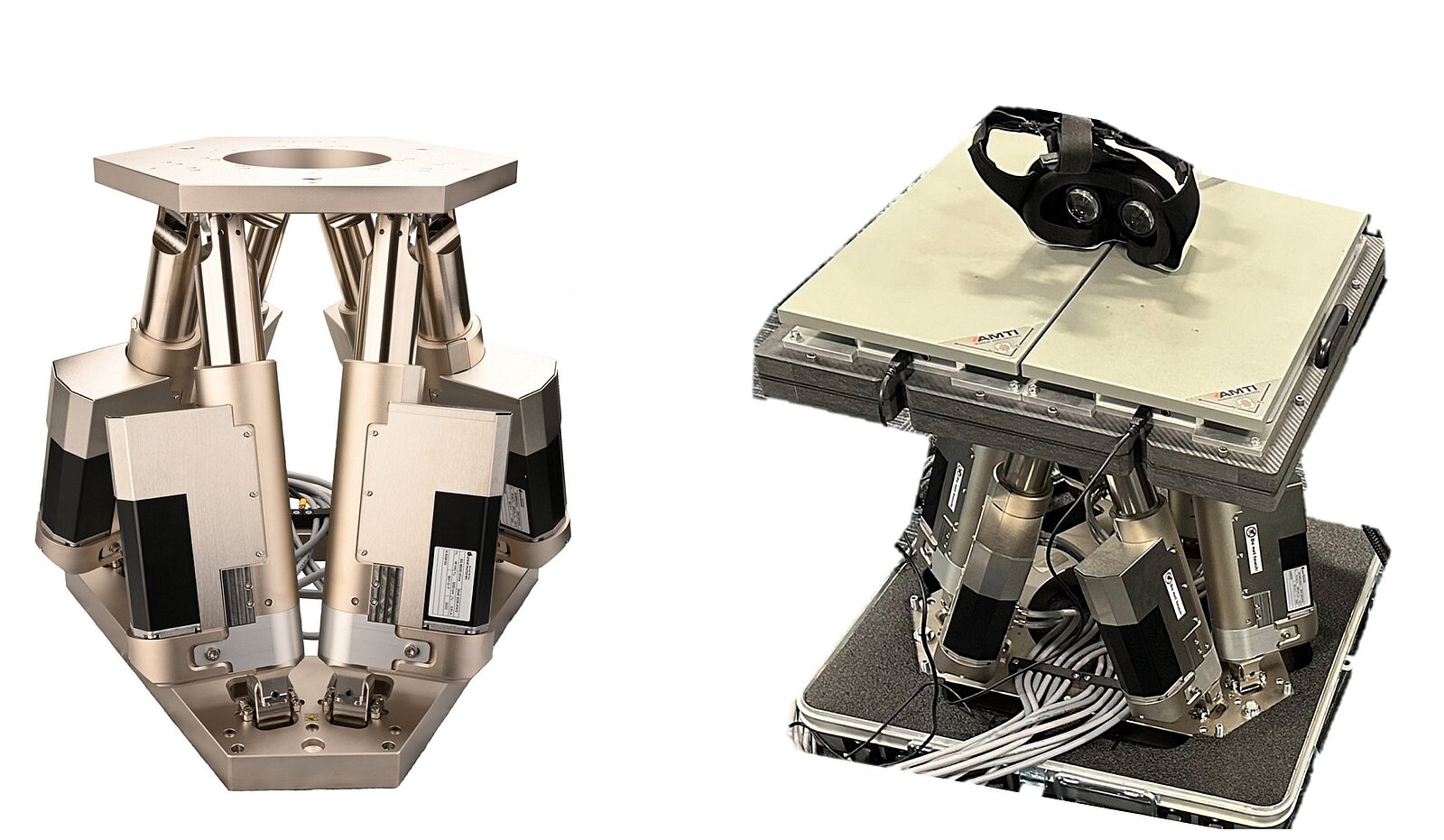
The hexapod consists of a fixed base and a movable top platform connected by six actuators operating in parallel, with each actuator contributing to all six degrees of freedom. This contrasts with traditional motion systems, where individual axes are stacked in series, each providing a single dedicated degree of motion.
Leveraging PI’s 30+ years of expertise in hexapod design, a custom system was developed to meet CRA’s specific requirements. Unlike PI’s typical precision-focused hexapod applications, this project prioritized load capacity and dynamic performance over high positioning accuracy.
System Scope
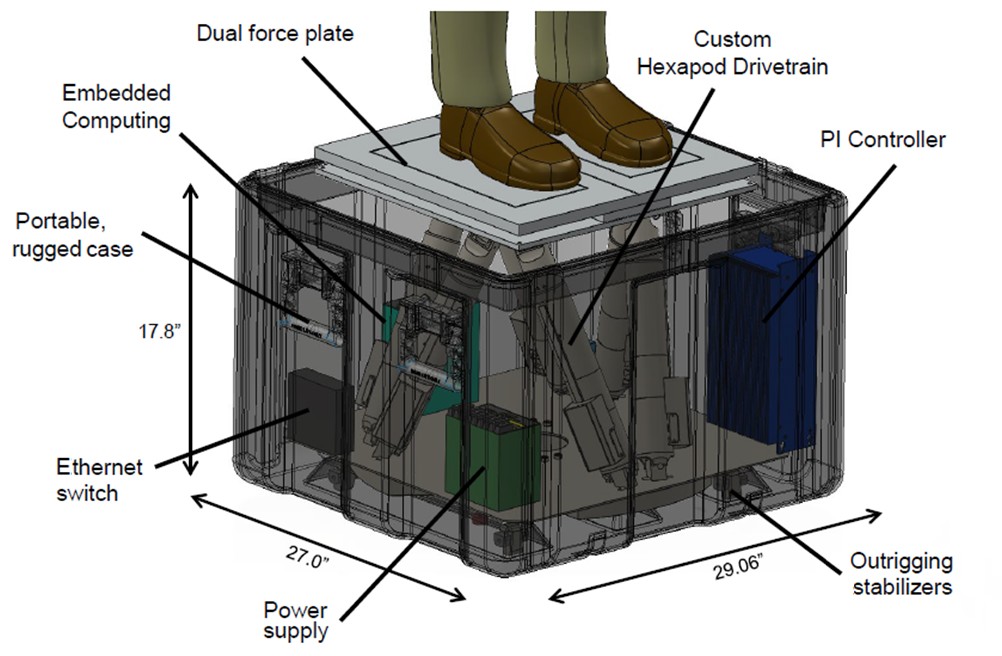
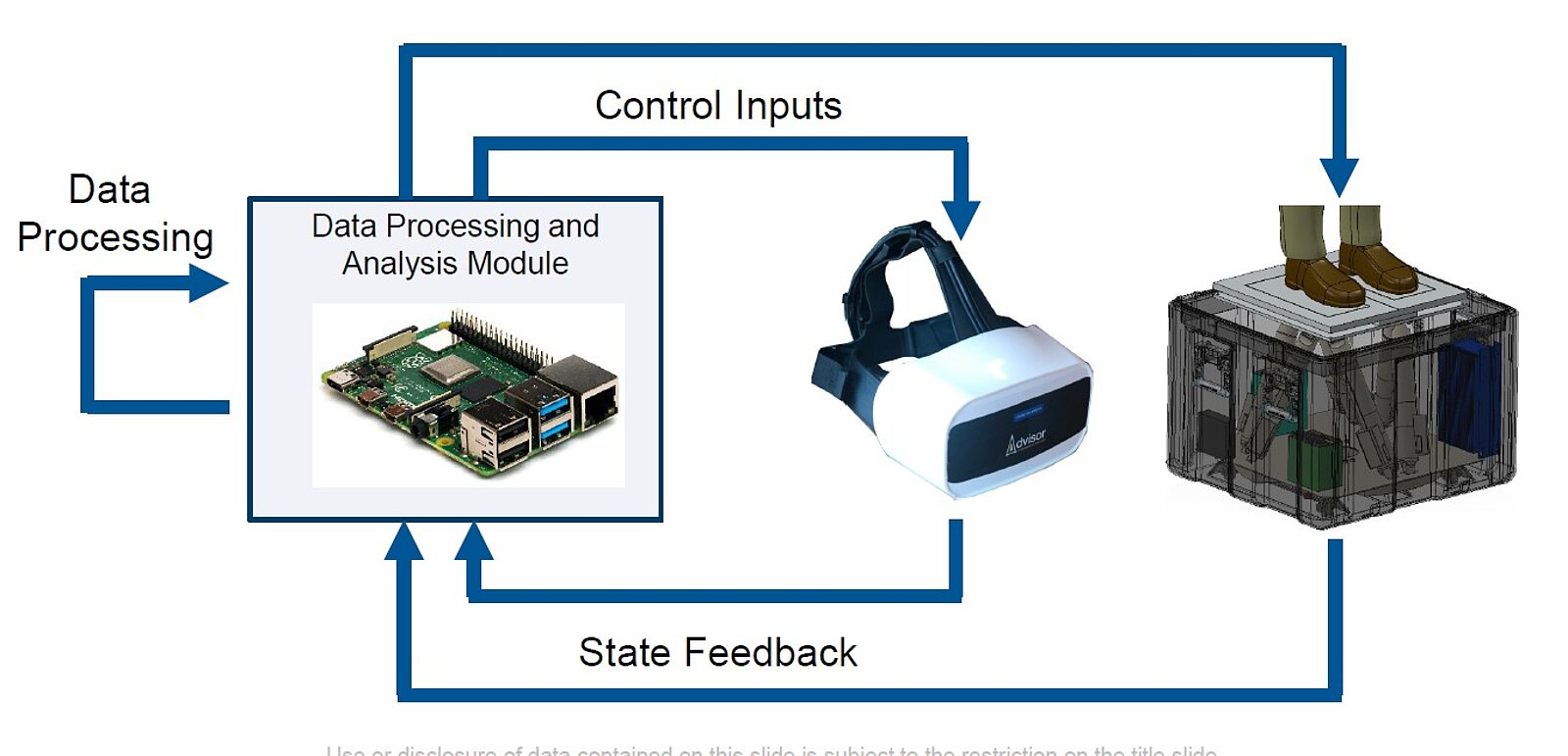
The new system is designed to integrate programmable platform instability, force feedback, center of mass (COM) tracking, and virtual reality (VR) technologies to assess and train all three sensory systems involved in balance: visual, vestibular, and somatosensory.
Hexapod Specifications
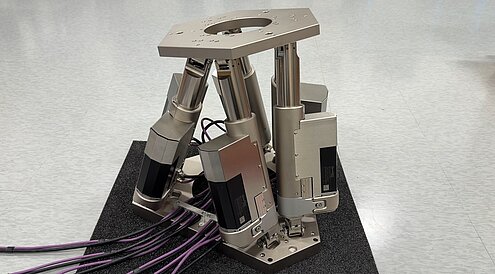
- Load Capacity 300lbs
- Rotation Range: +/-20 degrees
- Velocity: 70 deg/sec
- Acceleration: 200 deg/sec2
- Overall weight: <385lbs
The hexapod can also provide linear motion in XYZ (heave, surge, sway).
Acknowledgements
This material is based upon work supported by the Department of Defense (DoD) Small Business Innovation Research (SBIR) Program under Purchase Order No. W81XWH22C0069. Any opinions, findings and conclusions or recommendations expressed in this material are those of the author(s) and do not necessarily reflect the views of the DoD SBIR Program or the US Army Medical Research Acquisition Activity (USAMRAA).



Blog Categories
- Aero-Space
- Air Bearing Stages, Components, Systems
- Astronomy
- Automation, Nano-Automation
- Beamline Instrumentation
- Bio-Medical
- Hexapods
- Imaging & Microscopy
- Laser Machining, Processing
- Linear Actuators
- Linear Motor, Positioning System
- Metrology
- Microscopy
- Motorized Precision Positioners
- Multi-Axis Motion
- NanoAutomation
- Nanopositioning
- Photonics
- Piezo Actuators, Motors
- Piezo Mechanics
- Piezo Transducers / Sensors
- Precision Machining
- Semicon
- Software Tools
- UHV Positioning Stage
- Voice Coil Linear Actuator
- X-Ray Spectroscopy