NASA’s Roman Space Telescope Supported by PI Precision Motion Technologies
More than a decade of collaboration spanning cryogenic positioning, optical alignment, precision robotics, and flight-qualified piezo actuators.
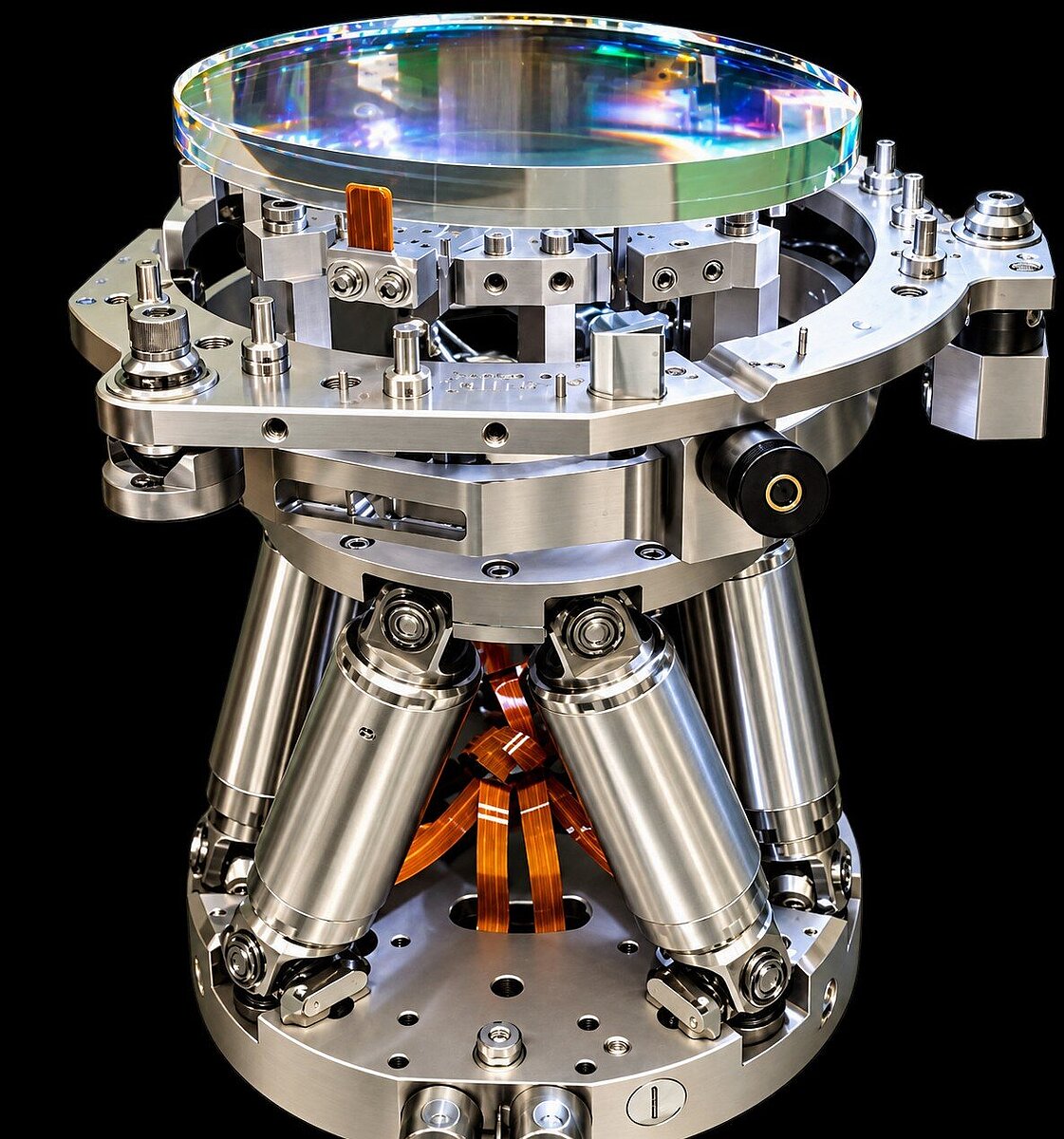
The successful launch of NASA's Nancy Grace Roman Space Telescope marks the culmination of years of engineering, integration, testing, and validation across a wide range of advanced technologies. Among them are precision motion and piezoelectric systems supplied by PI (Physik Instrumente), which supported multiple phases of the program, from early instrument development and optical alignment to flight hardware now operating in space.
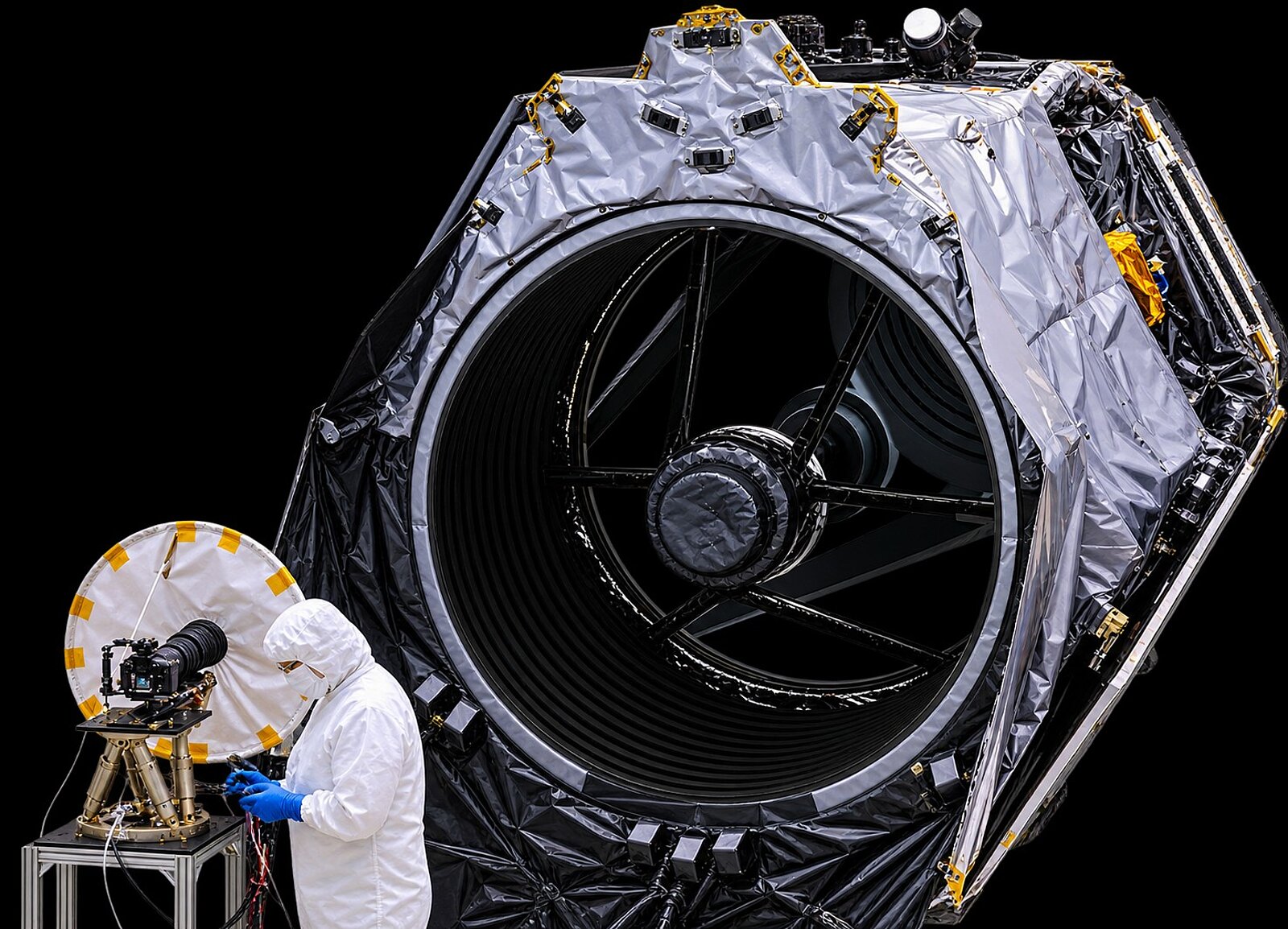
Roman launched aboard a SpaceX Falcon Heavy on August 30, 2026, and is currently traveling to the Sun-Earth L2 Lagrange point, approximately one million miles from Earth. The observatory combines a 2.4-meter primary mirror with a field of view roughly 100 times larger than Hubble's, enabling wide-area surveys to investigate dark energy, dark matter, exoplanets, and the large-scale structure of the universe.
PI's involvement dates back to Roman's early development under the Wide Field Infrared Survey Telescope (WFIRST) program. Over more than a decade, PI technologies have been used in cryogenic testbeds, optical integration processes, automated motion systems, and ultimately within flight-qualified subsystems now aboard the telescope itself.
Precision Motion from Early Testbeds to Flight Systems
One of PI's earliest contributions came through cryogenic positioning stages supplied for instrument development testbeds. Designed to operate at temperatures between approximately 200 K and 220 K, these systems provided the precise motion control needed to characterize optical and detector performance under realistic operating conditions.
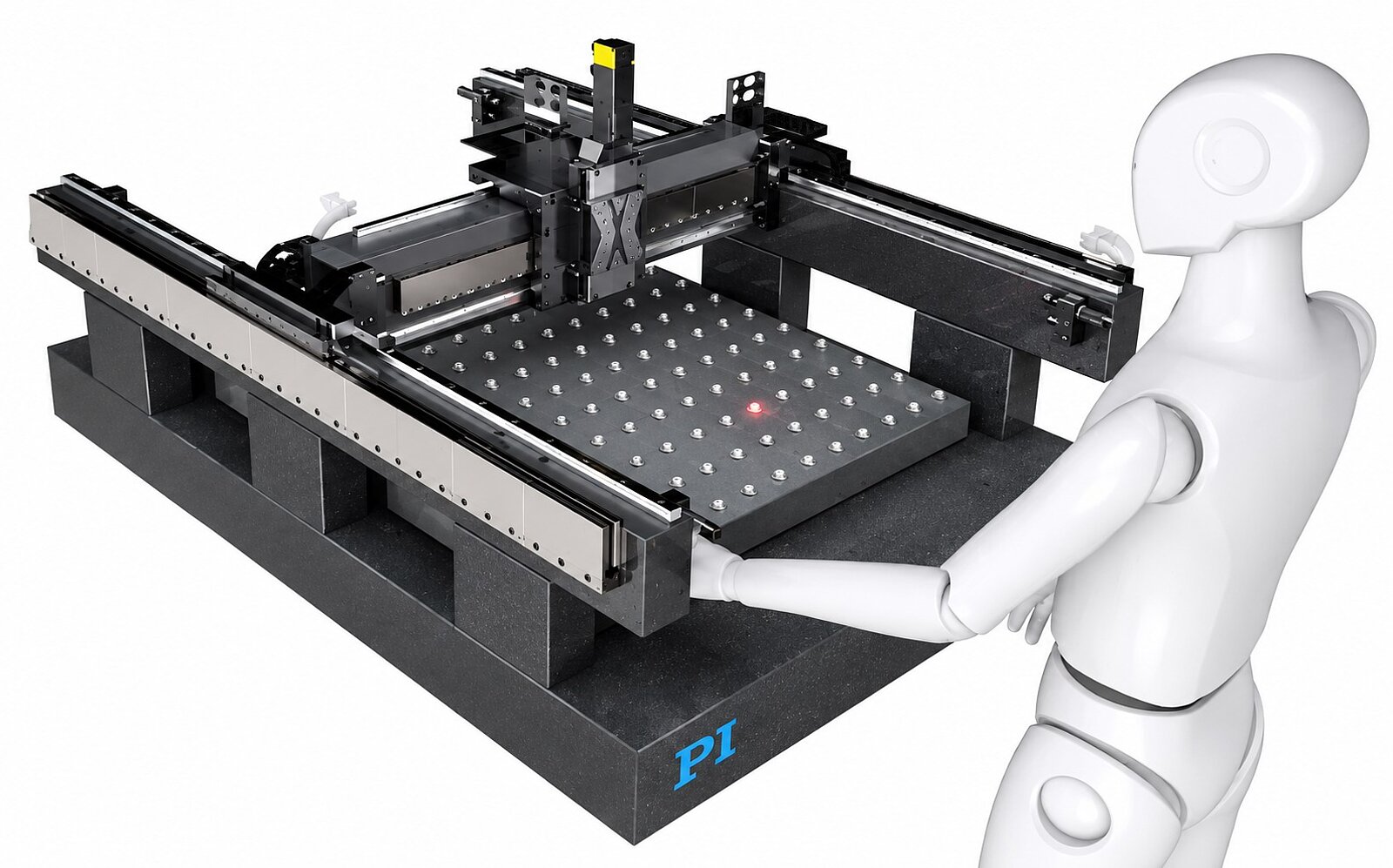
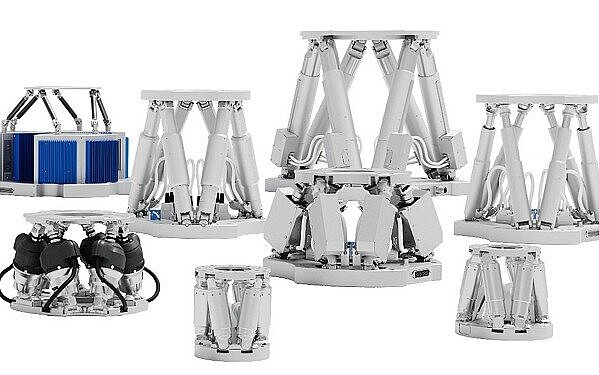
As development progressed, PI supplied additional positioning systems, including high-precision gantries and six-degree-of-freedom hexapods. These platforms supported both subsystem development and larger-scale integration activities, including work performed on Roman's Fifth Scale Testbed.
The ability to provide precise motion in six axes proved particularly valuable during optical alignment activities associated with Roman's primary science instrument, the Wide Field Instrument (WFI), a 300-megapixel infrared imaging and spectroscopy system.
Hexapod-Based Alignment of Spectroscopy Optics
Integrating spectroscopy optics into a spaceflight instrument requires positioning accuracies difficult to achieve with conventional mechanical fixturing alone. For the WFI, PI hexapods enabled active six-axis alignment of optical elements before final bonding.
The alignment process is described in the SPIE Journal of Astronomical Telescopes, Instruments, and Systems paper, Compact Prism Assembly for Slit-less Spectroscopy Capability in Roman. According to the authors, prism elements were mounted in temporary fixtures attached to a hexapod and aligned using data from optical profilers and theodolites.
The hexapod allowed engineers to position each optic with sub-micron and sub-arcsecond precision within its flight cell. Once alignment requirements were met, adhesive was injected and cured, permanently locking the component into place.
One example involved the alignment of the P1 prism element, which was positioned and bonded using the same fundamental methodology previously developed for Roman's grism assembly.
These optical elements play a critical role in the WFI's spectroscopy capabilities. The grism and prism disperse incoming infrared light into spectra, enabling scientists to determine physical properties, composition, and distance information for astronomical objects that cannot be obtained from imaging alone.
PI Piezo Technology Aboard Roman's Coronagraph
PI technology contributed not only to ground-based development and testing, but also to hardware now operating aboard the telescope.
Roman's Coronagraph Instrument (CGI) is a technology demonstration designed to directly image exoplanets and circumstellar material by suppressing the overwhelming brightness of nearby stars. Achieving this level of starlight suppression requires active wavefront control and exceptionally stable pointing performance.
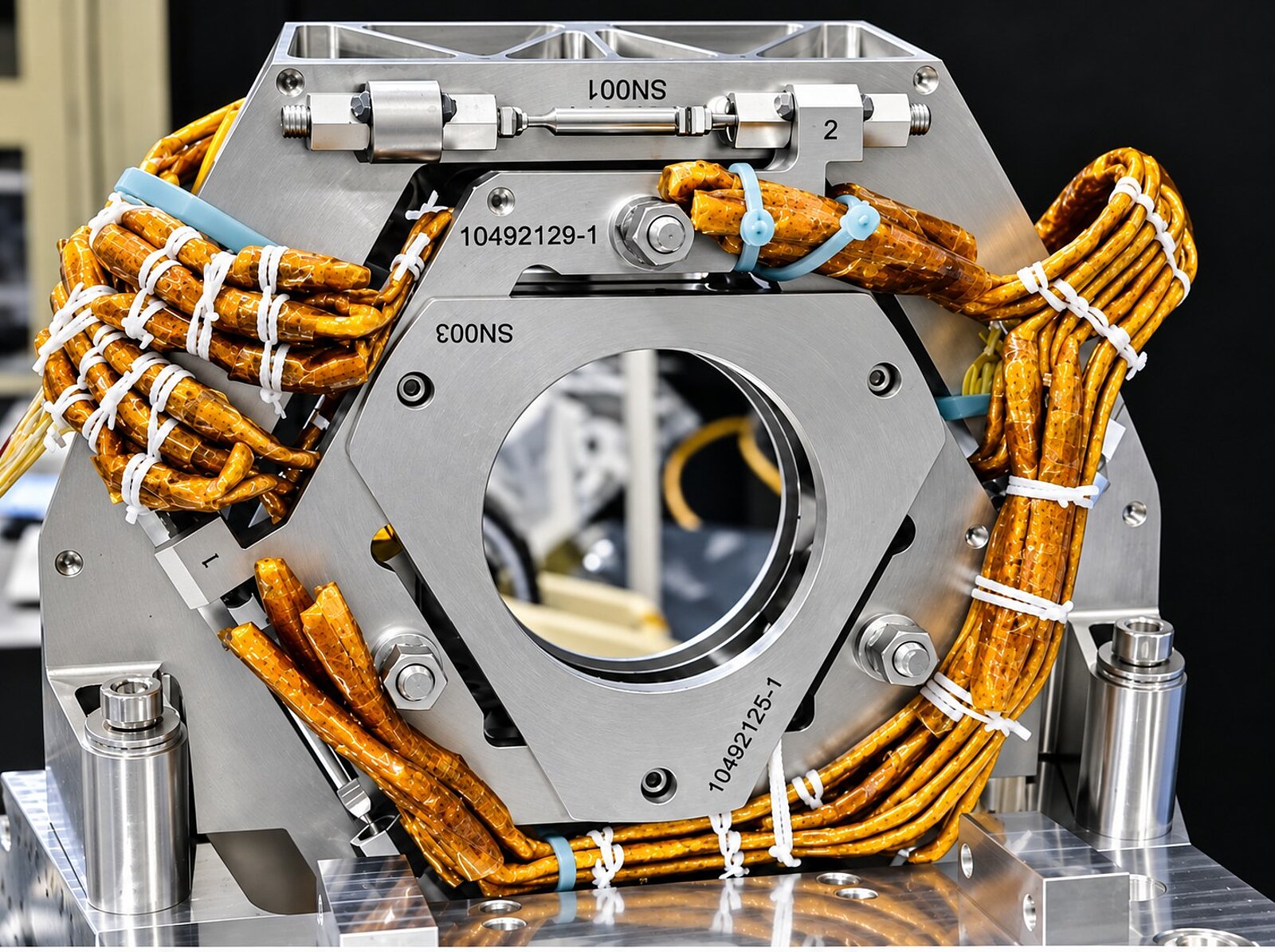
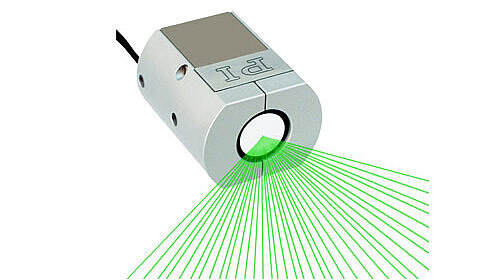
During development, engineers used PI's S-330 Fast Steering Mirror (FSM) systems for testing and evaluation activities. More significantly, the flight Coronagraph Fast Steering Mirror mechanism incorporates three PI PICMA®
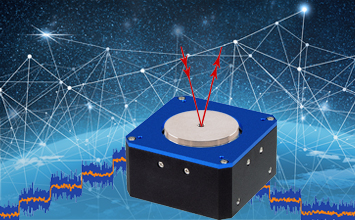
P-888.51 piezoelectric actuators arranged in a triangular configuration. Integrated strain-gauge sensors provide position feedback for closed-loop operation and nanometer-scale motion control.
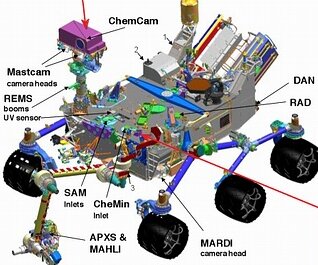
PICMA® actuators were selected in part because of their proven reliability in demanding aerospace applications. NASA previously qualified the technology for Mars mission applications, where testing demonstrated more than 100 billion operating cycles without failure.
Precision Engineering Across the Entire Program Lifecycle
The Roman mission illustrates how precision positioning technologies support nearly every stage of a modern space observatory's development.
Over the course of the program, PI systems contributed to cryogenic instrument development, automated test platforms, optical integration processes, precision alignment and bonding operations, coronagraph development, and ultimately flight hardware.
What began as enabling technology for laboratory testbeds evolved into mission-critical components operating in space.
Following its successful launch, NASA activated Roman's Wide Field Instrument in September 2026. Initial system checkouts confirmed nominal operation of both the WFI and Coronagraph as the observatory continues its journey toward L2. First science observations are expected in early 2027.
For PI, Roman represents more than a single application of motion control technology. It demonstrates how precision positioning solutions, including cryogenic stages, hexapods, automated motion systems, fast steering mechanisms, and piezoelectric actuators, can address the diverse alignment and stability challenges encountered throughout the development of a next-generation space observatory.




Blog Categories
- Aero-Space
- Air Bearing Stages, Components, Systems
- Astronomy
- Automation, Nano-Automation
- Beamline Instrumentation
- Bio-Medical
- Hexapods
- Imaging & Microscopy
- Laser Machining, Processing
- Linear Actuators
- Linear Motor, Positioning System
- Metrology
- Microscopy
- Motorized Precision Positioners
- Multi-Axis Motion
- NanoAutomation
- Nanopositioning
- Photonics
- Piezo Actuators, Motors
- Piezo Mechanics
- Piezo Transducers / Sensors
- Precision Machining
- Semicon
- Software Tools
- UHV Positioning Stage
- Voice Coil Linear Actuator
- X-Ray Spectroscopy